About This Book
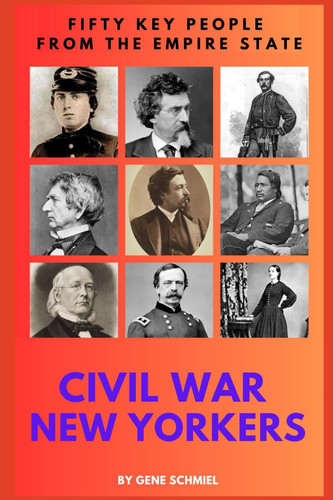
New York was the most populous state in the Union at the start of the Civil War, and, some might say, therefore the most important. It provided tens of thousands of men and women who participated in the war. Many of them held state, city, and national leadership positions, in part because of their abilities and in part because of the power, influence, and money of their state. Most of them were favorably inclined toward preserving the Union, but a few leaders were Copperheads, actively supporting (or at least not opposing) secession before the war, and advocating compromises, including separation, during the war. The New York city draft riots of mid-1863 also exposed an underlying dissatisfaction among some elements of society that the war was not as popular as the state government had believed.The key people about whom I’ve written are varied, as can be seen from those on the cover. William Seward wanted desperately to be president, but he proved to be a superb Secretary of State. Ely Parker was a man between two worlds, the Indian and the American, and he prospered in both. Mary Walker faced many obstacles but remains the only woman to receive the Medal of Honor. Horace Greeley was an influential newspaperman, but too eccentric to win the presidency. Matthew Brady revolutionized photography but died in poverty. Thomas Nast became the first major influential political cartoonist. Thomas Meagher was symbolic of the influence of immigrants in the Union forces. Alonzo Cushing was symbolic of the courage of the men who faced adversity and performed magnificently. Dan Sickles was symbolic of the corruption and dark side of the war, a personality who to this day remains extremely controversial.
ISBN-13:
9798870629742
More by Schmiel, Gene
Stay Updated
Get notified about new books by Schmiel, Gene and similar authors.
No spam, ever. Unsubscribe anytime.