Blog

Tuesdays With Morrie by Mitch Albom: 17-Million Copy Memoir

Some books quietly outsell almost every novel published in the same decade and you only notice years later, when a friend gives you a copy and tells you to read it on a Tuesday. Mitch Albom’s Tuesdays with Morrie is one of those books. Published in 1997 as a slim memoir from a Detroit sports columnist, it has gone on to sell more than 17 million copies in over 45 languages and has spent extended runs on the New York Times bestseller list — including a remarkable stretch as the longest-running nonfiction bestseller of its kind.

It is also the book that turned Albom’s career inside out. He was a working sportswriter when he wrote it. By the time the dust settled he was a household name in the inspirational-narrative space and the author of a dozen books that have collectively sold close to 40 million copies.

If you found this page searching for a review of Tuesdays with Morrie, or trying to figure out whether the book is right for you, or working through Mitch Albom’s catalog and trying to decide what to read next — this is the long-form reader’s guide.

What Tuesdays with Morrie Is About

The book is the true story of fourteen Tuesdays. Albom — then a star sports columnist at the Detroit Free Press with a parallel career in radio and television — happened to see his old college sociology professor, Morrie Schwartz, in a brief interview on Nightline. Schwartz had been diagnosed with amyotrophic lateral sclerosis (ALS), a degenerative motor neuron disease for which there is no cure, and Ted Koppel was profiling him because Schwartz had decided to spend his final months teaching one last course — a course about how to die, and therefore how to live.

Albom, who hadn’t been in touch with Schwartz since graduating from Brandeis University sixteen years earlier, picked up the phone. He flew from Detroit to Boston. The visit went well enough that he came back the next Tuesday. And the next. For the last fourteen Tuesdays of Schwartz’s life, Albom flew in once a week and they had what they both came to call “the last class.”

Each Tuesday they took on a single subject. The world. Self-pity. Regrets. Death. Family. Emotions. The fear of aging. Money. How love goes on. Marriage. The culture. Forgiveness. The perfect day. And — finally, on Tuesday number fourteen — saying goodbye.

The book is the record of those conversations, intercut with Albom’s own life and a parallel thread about Schwartz’s progression through the disease. Schwartz dies at the end. The reader knows that going in.

About Morrie Schwartz

Morris “Morrie” Schwartz (1916-1995) was a professor of sociology at Brandeis University for more than three decades. He’d been a hospital social worker, had done research at the Massachusetts Mental Health Center, and had co-authored an early book on patients’ lives inside psychiatric institutions (The Mental Hospital, 1954). Students at Brandeis remembered him as the kind of professor who made the class feel like a conversation and who took an active interest in his students’ inner lives.

After his ALS diagnosis in 1994, Schwartz spent his remaining time writing aphorisms about dying and being interviewed by anyone who asked. His own slim book of those reflections, Letting Go: Morrie’s Reflections on Living While Dying, was published shortly after his death. He was the rare academic who managed to leave behind a public philosophy rather than just a publication record.

Why the Book Endures

Several things explain why Tuesdays with Morrie has stayed in print and on bestseller lists for nearly three decades while most inspirational memoirs come and go in a season:

It is short. The hardcover runs about 192 pages. A motivated reader finishes it in a single evening. That length is doing real work — it forces the book to be every page essential, and it makes the book passable from one reader to the next without commitment friction.

It is accessible. Schwartz was a working professor but the book contains no academic jargon. His framework for thinking about love, family, work, and dying is delivered in plain language, often in conversational fragments. Readers who would never pick up a philosophy book read this one and report taking something useful from it.

It is structurally honest about death. Schwartz is dying through the entire book and the reader knows it. There is no twist, no recovery, no act-three save. The structural honesty is part of why the book lands with readers who are themselves caring for someone with a terminal diagnosis, or grieving, or contemplating their own mortality. It does not lie.

The themes are universal. The fourteen subjects Albom and Schwartz cover are subjects every reader has to address eventually. The book does not require the reader to share Schwartz’s specific background or beliefs to take something from it.

Albom is a working journalist. The prose was shaped by twenty years of newspaper deadlines. It is clean, concrete, and built around scenes rather than abstractions. That craft is the reason the book reads as quickly as it does.

Albom’s Voice and Background

Mitch Albom (born 1958) came to inspirational nonfiction by way of sports journalism. He spent decades as a columnist at the Detroit Free Press, won the Associated Press Sports Editors’ Sports Columnist of the Year award multiple times, hosted radio and television programs, and was a regular panelist on ESPN’s The Sports Reporters. He still writes a column. He still hosts a daily radio show in Detroit.

That background matters because it shapes the voice. Albom is a feature writer first, an essayist second, and a memoirist third. His sentences are short, his scenes are anchored in specific physical detail, and his transitions are journalistic — he changes topic by changing time, not by signaling abstractly. The book reads like a long-form magazine profile that happens to have philosophical content rather than like a philosophy book that happens to have a profile in it.

After Tuesdays with Morrie, Albom moved into fiction without abandoning the inspirational register. The books that followed — The Five People You Meet in Heaven, For One More Day, The Time Keeper — kept the short-chapter cadence and the meditation-on-mortality themes, but built them around imagined characters and scenarios rather than real interviews.

Mitch Albom’s Other Books

If Tuesdays with Morrie lands and you want more, here is the rest of Albom’s major catalog in publication order:

  • The Five People You Meet in Heaven (2003) — Albom’s first novel and his next blockbuster after Tuesdays. An elderly maintenance man named Eddie dies on his eighty-third birthday and meets five people in the afterlife who explain the meaning of his life. Adapted into a 2004 ABC television film. Tens of millions of copies sold.
  • For One More Day (2006) — A novel about a man given one more day with his deceased mother. Returns to the Albom signature themes of family, regret, and unfinished conversation.
  • Have a Little Faith (2009) — A nonfiction follow-up to Tuesdays with Morrie in spirit, profiling a rabbi in New Jersey and a pastor in Detroit. Albom’s return to long-form interview-based memoir.
  • The Time Keeper (2012) — A novel about Dor, the man who first measured time, sentenced to centuries in a cave before being given a chance at redemption.
  • The First Phone Call from Heaven (2013) — A novel set in a small Michigan town where residents begin receiving phone calls from deceased loved ones.
  • The Magic Strings of Frankie Presto (2015) — A novel about a Spanish guitarist with magical strings, framed as a biography narrated by the spirit of Music. Albom’s most stylistically ambitious novel.
  • The Next Person You Meet in Heaven (2018) — A direct sequel to The Five People You Meet in Heaven, picking up the story of Annie, the little girl Eddie saved at the end of the first book.
  • Finding Chika (2019) — A nonfiction memoir about a young Haitian girl Albom and his wife adopted from the orphanage Albom operates in Port-au-Prince, and her death from a rare brain tumor.
  • The Stranger in the Lifeboat (2021) — A novel set after a luxury yacht disaster, in which the survivors pull a man from the sea who claims to be the Lord.
  • The Little Liar (2023) — Albom’s most recent novel, a Holocaust-era story about an eleven-year-old Greek boy whose honesty is weaponized by a Nazi officer. A return to historical fiction.

The throughline across all of it is the same set of preoccupations: mortality, family, regret, second chances, and the question of what a life adds up to. If those themes work for you in Tuesdays, they’ll work for you in the rest of the catalog.

Cultural Impact

A few markers of what the book has become beyond its sales:

  • Oprah’s Book Club. Oprah Winfrey selected and championed Tuesdays with Morrie, which materially shaped its trajectory.
  • Television adaptation. A 1999 television film starring Jack Lemmon as Morrie and Hank Azaria as Mitch won four Emmy Awards including Outstanding Made for Television Movie. Lemmon won the Emmy for Outstanding Lead Actor in a Miniseries or Movie for his performance.
  • Broadway and stage adaptations. A two-person stage play co-written by Albom and Jeffrey Hatcher has been produced in regional theaters worldwide and ran off-Broadway. It remains in active production.
  • Curriculum adoption. The book is widely assigned in high school and college courses on death and dying, end-of-life ethics, gerontology, and life-writing.
  • Cited in hospice and palliative care contexts. Hospice professionals and palliative-care educators routinely cite Tuesdays as a useful book to recommend to families navigating a terminal diagnosis.

Who Should Read Tuesdays with Morrie

You will probably get something from Tuesdays with Morrie if:

  • You are facing a terminal diagnosis in your own life or caring for someone who is
  • You have lost a parent, mentor, or close family member and want a book that takes mortality seriously without flinching
  • You are looking for a short, readable introduction to philosophical questions about love, work, family, and death
  • You enjoy long-form journalism and interview-based nonfiction
  • You want a book you can finish in one sitting and pass to someone else
  • You read The Five People You Meet in Heaven first and want to know where Albom started

You may bounce off the book if you want academic philosophy with cited sources, if you prefer fiction to memoir, or if you find the inspirational-memoir genre’s tone off-putting on principle. Schwartz’s framework is sincere and not particularly contrarian — readers who want a more astringent meditation on death (say, Atul Gawande’s Being Mortal or Paul Kalanithi’s When Breath Becomes Air) may find Tuesdays too warm. Both can coexist on the same shelf.

Frequently Asked Questions

Who wrote Tuesdays with Morrie?

Tuesdays with Morrie was written by Mitch Albom, an American author, sports columnist, and radio host based in Detroit, Michigan. Albom was a working sportswriter at the Detroit Free Press when he wrote the book in the mid-1990s; the book’s success transformed his career into one of the bestselling inspirational-nonfiction franchises in modern publishing.

Is Tuesdays with Morrie a true story?

Yes. The book is a memoir of real conversations Mitch Albom had with his former Brandeis University sociology professor Morrie Schwartz over the last fourteen Tuesdays of Schwartz’s life, after Schwartz was diagnosed with ALS. Schwartz died in November 1995; the book was published in 1997.

How long is Tuesdays with Morrie?

The hardcover edition runs approximately 192 pages. Most readers finish it in a single sitting of two to three hours. That deliberate brevity is part of why the book has remained so frequently recommended and gifted.

What is the main message of Tuesdays with Morrie?

The book’s organizing idea is Morrie Schwartz’s claim that “once you learn how to die, you learn how to live.” Across fourteen Tuesday conversations, Schwartz and Albom work through the subjects Schwartz believed mattered most at the end of a life — love, family, work, money, forgiveness, aging, and death itself. The central practical takeaway is that the conscious confrontation of mortality clarifies what is worth spending one’s remaining time on.

What other books has Mitch Albom written?

Albom has published more than a dozen books. Major works include the novel The Five People You Meet in Heaven (2003) and its sequel The Next Person You Meet in Heaven (2018), For One More Day (2006), Have a Little Faith (2009), The Time Keeper (2012), The First Phone Call from Heaven (2013), The Magic Strings of Frankie Presto (2015), Finding Chika (2019), The Stranger in the Lifeboat (2021), and The Little Liar (2023). Browse the full catalog on the Mitch Albom author page.

Is Tuesdays with Morrie still in print?

Yes. The book remains continuously in print in hardcover, paperback, audiobook, and ebook editions through Broadway Books (Penguin Random House). A twentieth-anniversary edition with new material from Albom was released in 2017, and the book continues to appear regularly on extended bestseller lists nearly three decades after its original publication.

Who was Morrie Schwartz?

Morris “Morrie” Schwartz (1916-1995) was a professor of sociology at Brandeis University for more than thirty years. Before his academic career he worked as a hospital social worker and as a researcher at the Massachusetts Mental Health Center, co-authoring an early study of patient experience in psychiatric institutions (The Mental Hospital, 1954). He was diagnosed with ALS in 1994 and died in November 1995.

Was Tuesdays with Morrie made into a movie?

Yes. A 1999 television film adaptation starring Jack Lemmon as Morrie and Hank Azaria as Mitch aired on ABC and won four Emmy Awards, including Outstanding Made for Television Movie and Outstanding Lead Actor in a Miniseries or Movie for Lemmon. Oprah Winfrey was an executive producer. A two-person stage adaptation by Albom and Jeffrey Hatcher is also widely produced.

Where to Go Next

Browse the full Mitch Albom catalog on his author page at BooksAndGuidesPro, or jump directly to the Tuesdays with Morrie book page for retailer links and metadata. Readers who finish Tuesdays often go next to Albom’s The Little Liar (2023), his most recent novel and a return to historical fiction.


Donald McCaig’s Authorized Gone With the Wind Sequels

When Margaret Mitchell died in a 1949 traffic accident in Atlanta, she left behind one of the most commercially successful novels in American publishing history — Gone with the Wind (1936) — and a Pulitzer Prize, a film that had swept the 1939 Academy Awards, and a literary estate that would spend the next half century deciding whether to authorize a sequel. The answer, eventually, was yes. Three times.

The Mitchell estate has sanctioned exactly three sequel or prequel novels to Gone with the Wind. The first went to Alexandra Ripley in 1991. The other two went to Donald McCaig — a Virginia novelist, sheepdog trainer, and Civil War specialist whose name most casual readers wouldn’t immediately recognize. That choice was not an accident, and the two books he produced — Rhett Butler’s People (2007) and Ruth’s Journey (2014) — are the most ambitious attempts so far to extend the world of Tara into territory Mitchell never tried to map.

If you found this page searching for the official Gone with the Wind sequel, or trying to figure out the right reading order, or wondering whether McCaig’s books are worth your time — this is the long-form reader’s guide.

Who Was Donald McCaig?

Donald McCaig (1940-2018) was an American novelist who lived for most of his adult life on a sheep farm in Williamsville, Virginia, in the western Allegheny Mountains. He came to fiction late — his first novel was published in his forties — and built a reputation in two distinct lanes: Civil War historical fiction and working-dog narratives.

The Civil War work is what brought him to the Mitchell estate’s attention. His novel Jacob’s Ladder: A Story of Virginia During the War (1998) won the Michael Shaara Award for Excellence in Civil War Fiction in 2000, an award named for the author of The Killer Angels. Jacob’s Ladder traces a Virginia family across the entire arc of the war, with the kind of researched specificity — uniform regulations, regimental movements, the texture of Confederate home-front life — that signaled McCaig was not going to romanticize the Confederacy on the page.

His sheepdog books — Nop’s Trials (1984) and Nop’s Hope (1994), built around a border collie named Nop and his handler — found a devoted audience among working-dog people and earned him recognition that had nothing to do with Civil War scholarship. He trained and trialed border collies himself for decades. The two careers ran in parallel.

When the Mitchell estate began looking for a second sanctioned author after the mixed reception of Ripley’s Scarlett, McCaig’s combination of Civil War credibility, a literary track record outside the bestseller machine, and a writing voice that didn’t read like commercial fiction made him a natural pick.

The Three Authorized Gone with the Wind Sequels

Here are the three books the Mitchell estate has officially sanctioned, in order of publication:

1. Scarlett by Alexandra Ripley (1991)

The first authorized continuation, published 55 years after Mitchell’s original. Ripley, a Charleston-born novelist already known for Southern historical fiction (Charleston, On Leaving Charleston), was selected after a multi-year search by the estate. The book picks up immediately after the famous “frankly, my dear” closing of the original and follows Scarlett O’Hara through Charleston, Savannah, and eventually Ireland, in pursuit of a reconciliation with Rhett Butler.

Commercially, Scarlett was a global phenomenon — it sold in dozens of countries and was adapted into a 1994 CBS miniseries with Joanne Whalley and Timothy Dalton. Critically, the reception was harsher: a sizable contingent of reviewers and Mitchell devotees felt the book pulled Scarlett away from the American Civil War setting that defined her into a romance plot that didn’t match the original’s grain. It remains a divisive book — adored by some readers, dismissed by others.

2. Rhett Butler’s People by Donald McCaig (2007)

The Mitchell estate’s second sanctioned sequel, and a fundamentally different project from Scarlett. Instead of continuing the story past 1873, McCaig went sideways and inward — retelling the events of Gone with the Wind from Rhett Butler’s point of view, and filling in the decades of Rhett’s life Mitchell had only hinted at: his Charleston boyhood, the duel that got him expelled from his father’s house, his years on the docks, his blockade-running, his time in Reconstruction.

The book runs more than 500 pages in hardcover and reads as a stand-alone novel that happens to intersect with Mitchell’s plot at several key points. McCaig’s prior Civil War scholarship is visible on every page — the Charleston society scenes, the blockade-runner mechanics, the Confederate cavalry sequences are rendered with a level of period detail Mitchell herself never attempted. Reviews were genuinely mixed but skewed considerably more positive than Ripley’s reception had been; critics who disliked the project on principle still tended to acknowledge McCaig’s prose was a step up.

3. Ruth’s Journey: The Authorized Novel of Mammy by Donald McCaig (2014)

McCaig’s second authorized novel, and the most ambitious of the three sequels. Ruth’s Journey is a prequel that tells the life story of the character Mitchell called “Mammy” — the enslaved woman who served the O’Hara family at Tara and who exists in Mitchell’s original almost entirely through other characters’ eyes. McCaig gives her a name (Ruth), a Caribbean origin, a captivity narrative, decades of inner life, and the agency Mitchell never granted her.

The project was always going to be difficult. The character as Mitchell wrote her is a foundational example of the “loyal slave” stereotype that twentieth-century Black writers and historians have spent generations dismantling. McCaig, a white Virginia novelist writing across enormous distances of race, gender, and history, was attempting to redeem and re-author a figure many readers feel should never have been written that way in the first place. The book did what it could — extensive historical research on plantation life and on the Saint-Domingue revolutionary period, consultation with Black scholars, a clear authorial intent to grant Ruth interiority Mitchell denied her — and it received correspondingly mixed reviews. Some critics praised the ambition and the research; others felt the project itself was unsalvageable regardless of execution.

However you land on the conceptual question, Ruth’s Journey is the book in this trilogy that engages most directly with the moral content of Mitchell’s original. It is not a Scarlett-and-Rhett romance. It is an attempt to reckon with what Gone with the Wind left out.

Why the Estate Chose McCaig (Twice)

The Mitchell estate’s logic for picking McCaig — and going back to him a second time — comes through clearly when you stack his work against Ripley’s. Three things mattered:

Civil War specialism. Ripley was a Southern historical novelist; McCaig was a Civil War specialist with a Shaara Award and a body of researched work behind him. For a project where the period detail is the foundation, that depth matters.

A literary register. McCaig’s prose reads as literary fiction rather than commercial romance. The estate seems to have decided, after Scarlett‘s reception, that the sequels would land better critically if they were written in a voice closer to Mitchell’s own ambition than to the bestseller cadence.

Willingness to engage the hard material. Ruth’s Journey exists because McCaig was willing to attempt the part of the Mitchell world most contemporary readers find indefensible. Whether he succeeded is a separate question from whether the attempt was worth making — but the estate’s decision to commission the book at all signaled they wanted someone who would take that on rather than write another Rhett-and-Scarlett romance.

Reading Order Recommendation

Strictly speaking, the three authorized sequels can be read in any order. None of them depends on the others; each was written as a stand-alone book that intersects with Mitchell’s 1936 original.

If you’re approaching the world cold, the most common recommendation is:

  1. Gone with the Wind by Margaret Mitchell (1936) — the foundation; everything else assumes you know this story
  2. Rhett Butler’s People by Donald McCaig (2007) — the cleanest companion to the original, retelling familiar events from a new POV and filling in the off-page decades
  3. Ruth’s Journey by Donald McCaig (2014) — the prequel that reframes the moral world Mitchell built; best read after you’ve encountered both Mitchell and McCaig’s Rhett
  4. Scarlett by Alexandra Ripley (1991) — the chronological forward continuation; read it last if you want to see what a Mitchell-after-Mitchell looks like in a different authorial register

If you want pure publication order, swap Ripley to position two. Either way works.

McCaig’s Other Notable Books

If you read either of the authorized sequels and want more McCaig, the rest of his catalog is worth knowing about:

  • Jacob’s Ladder: A Story of Virginia During the War (1998) — the Civil War novel that won the Michael Shaara Award and brought McCaig to the Mitchell estate’s attention. A Virginia family across the four years of the war, written with the same researched specificity that distinguishes Rhett Butler’s People.
  • Canaan (2007) — a Reconstruction-era follow-up to Jacob’s Ladder, tracing several of the same characters through the years immediately after the war.
  • Nop’s Trials (1984) — McCaig’s first sheepdog novel, about a border collie named Nop and the stockman who trains him. Beloved by working-dog readers and a useful entry point into McCaig’s quieter, non-Civil-War voice.
  • Nop’s Hope (1994) — the sequel to Nop’s Trials.
  • Eminent Dogs, Dangerous Men (1991) — McCaig’s nonfiction travel book about his trip to Scotland to acquire a border collie and the world of working sheepdog handlers.

The throughline across all of it is the same: meticulous research, a refusal to romanticize, and an authorial interest in the working life — whether that’s a Confederate cavalryman, a Charleston blockade-runner, an enslaved Caribbean woman, or a Scottish sheep handler. McCaig wrote about people doing hard physical work in hard historical conditions, and he did the research to render that work honestly.

Frequently Asked Questions

Who wrote the official Gone with the Wind sequels?

Three authors have written officially sanctioned Gone with the Wind sequels or prequels with the approval of Margaret Mitchell’s literary estate: Alexandra Ripley wrote Scarlett (1991), and Donald McCaig wrote both Rhett Butler’s People (2007) and Ruth’s Journey: The Authorized Novel of Mammy (2014). McCaig is the only author the estate commissioned twice.

Is Rhett Butler’s People worth reading?

For readers of Gone with the Wind, yes. McCaig’s Rhett Butler’s People (2007) retells Mitchell’s events from Rhett’s point of view and fills in the decades of his life — Charleston boyhood, the duel that broke him from his father, the blockade-running years, his Reconstruction — that Mitchell only hinted at. It received considerably warmer reviews than the first sanctioned sequel and is generally considered the most readable of the three authorized continuations.

What is Ruth’s Journey about?

Ruth’s Journey: The Authorized Novel of Mammy (2014) is a prequel by Donald McCaig that tells the life story of the character Mitchell called “Mammy.” McCaig gives her a name (Ruth) and a Caribbean origin, traces her captivity and her decades in the O’Hara household, and grants her the interiority Mitchell’s original denied her. The book engages with the moral content of Gone with the Wind more directly than any other sequel and received mixed but substantive reviews.

How many authorized Gone with the Wind sequels are there?

Three: Scarlett by Alexandra Ripley (1991), Rhett Butler’s People by Donald McCaig (2007), and Ruth’s Journey by Donald McCaig (2014). Numerous unauthorized fan continuations, pastiches, and parodies also exist (most famously Alice Randall’s The Wind Done Gone, which was the subject of a copyright lawsuit by the estate), but only those three carry the estate’s sanction.

Did Margaret Mitchell write a sequel?

No. Margaret Mitchell published only one novel during her lifetime, Gone with the Wind (1936), and consistently declined to write a sequel despite enormous commercial pressure. She died in 1949 from injuries sustained when she was struck by a speeding car in Atlanta. Her novella Lost Laysen, written when she was a teenager, was published posthumously in 1996 but is unrelated to the Gone with the Wind world.

What other books has Donald McCaig written?

McCaig’s catalog includes Civil War fiction (Jacob’s Ladder, Canaan), sheepdog novels (Nop’s Trials, Nop’s Hope), and nonfiction (Eminent Dogs, Dangerous Men). Jacob’s Ladder won the Michael Shaara Award for Excellence in Civil War Fiction in 2000 and is the book that brought him to the Mitchell estate’s attention.

Are the Donald McCaig sequels considered canon?

“Canon” is a slippery word with a novel that has multiple authorized continuations. The Mitchell estate has officially sanctioned all three sequels, which makes them the only continuations that can legally use Mitchell’s characters and setting. Whether individual readers accept any of them as canonical to Mitchell’s world is a personal call — reception is genuinely mixed and there is no single fan consensus.

Where to Go Next

Browse Donald McCaig’s full catalog on his author page at BooksAndGuidesPro, or jump straight to the Ruth’s Journey book page for retailer links and metadata. If your interest is the broader Civil War fiction shelf or the world of authorized literary continuations, the BooksAndGuidesPro catalog has neighboring titles in both directions.


Godplayer by Robin Cook: 1983 Medical Thriller Review

The premise sounds like a hospital administrator’s nightmare and a medical-thriller reader’s dream: a Boston teaching hospital is losing cardiac-bypass patients on the operating table at a rate the surgical staff won’t publicly admit. A young anesthesia resident notices the pattern. Her husband — one of the hospital’s star cardiac surgeons — has every reason not to want her digging. That’s the engine that drives Godplayer, Robin Cook’s fourth medical thriller, published as a Signet paperback original in January 1983.

If you found this page by searching godplayer book review, robin cook godplayer summary, or is godplayer worth reading — this is the long-form review and reader’s guide for you. Plot setup with no major spoilers, themes, where it fits in Cook’s catalog, six books like Godplayer, and the questions actual readers ask before they buy.

What Godplayer Is About (No Spoilers)

Dr. Cassandra “Cassi” Cassidy is finishing her anesthesia residency at Boston Memorial — a fictional teaching hospital styled closely on the New England-area academic-medicine world Cook knew firsthand. She’s brilliant, sharp, and married to Dr. Thomas Kingsley, one of the hospital’s star cardiac surgeons. The marriage is the kind that looks polished from the outside and has a weather front rolling through it on the inside.

Cassi notices that an unusual number of heart-bypass patients are dying on the table or shortly after, in cases that — on paper — should have been routine. She does what any anesthesiologist with a research background does: she pulls the charts. The chart review opens a door she cannot close.

The rest of the book is the slow tightening of that door behind her. Cook keeps the reveal at a deliberate pace, alternating tight POVs between Cassi and Thomas so that the reader feels the marriage breaking from both sides while the conspiracy underneath becomes clearer. By the time the final-act chase moves into the operating-room corridors, the medical procedural and the marriage thriller have braided into the same rope.

Why Godplayer Became a Robin Cook Signature

By 1983 Cook had already published Coma (1977), Sphinx (1979), and Brain (1981). Coma had put him on the map and the film adaptation had made his name a brand. Godplayer is the book where the Robin Cook formula crystallized into something he would refine for the next forty years.

The ingredients show up in their purest form here:

  • A doctor protagonist who is competent but underestimated by the system around them
  • A modern teaching hospital where the prestige of the institution is the antagonist’s shield
  • Medical procedure rendered with the unfaked detail of a working physician (Cook was a practicing MD at Massachusetts Eye and Ear Infirmary)
  • A conspiracy that uses real pharmacology, real surgical workflow, and real institutional incentives as its weapon
  • Short, punchy chapters with alternating POVs and a body count that escalates steadily
  • A title that names the moral question directly — Coma, Brain, Fever, Outbreak, Godplayer

That last one matters. Godplayer is not a subtle title and it’s not meant to be. The book is interrogating the doctor-as-god complex — the way surgical celebrity, hospital revenue, and the asymmetric power of the OR can produce a person who genuinely believes their judgment of who should live and die outranks the patient’s. Cook does not let his antagonist off the hook, and he does not let the institution that enabled the antagonist off the hook either.

Themes — Medical Ethics, Conspiracy, and Mortality

Three themes do the heavy lifting:

Medical ethics under institutional pressure. The book is a sustained argument that the structures that protect star physicians — peer review, mortality and morbidity conferences, departmental loyalty — can also be the structures that conceal harm. Cook does not write the staff at Boston Memorial as villains. He writes them as people whose careers, mortgages, and identities are entangled with the hospital’s reputation, and shows how that entanglement quietly recalibrates what they’re willing to see.

Marriage inside a power asymmetry. Cassi is a resident; Thomas is an attending and a department headline. The book is honest about what that does to a marriage in 1983 — the unspoken expectation that her career bends to his, the way she has to manage his ego around her own intelligence, the small daily compromises that add up. When the conspiracy plot begins to bite, the reader has already watched the marital plot prepare the ground.

Mortality and the surgeon’s relationship to it. Cardiac surgery in the early 80s was the high-status frontier of medicine. Cook uses that status to ask: what happens to a person who routinely holds another person’s beating heart in their hand? Some answers are mundane. Some are darker. Godplayer is interested in the darker answers without being lurid about them.

Is Godplayer Based on a True Story?

No, the plot is fictional. But the institutional textures are not invented. Cook wrote the book while he was still practicing medicine, and the procedural details — the OR hierarchy, the anesthesia-resident workflow, the politics of mortality and morbidity review, the way pharmacology questions get asked and answered inside a department — are drawn from the world he was working inside.

The broader concern that animates the book — that medical celebrity and institutional reputation can suppress legitimate patient-safety signals — was being discussed in medical-ethics journals in the late 70s and early 80s, and continues to be discussed today. Godplayer takes that concern and dramatizes it through one extreme case. Read it as a thriller, not as reportage.

Who Should Read Godplayer

You will probably love Godplayer if:

  • You read Coma and want the next Robin Cook to hit
  • You like medical thrillers where the doctor’s job is the puzzle, not just the setting
  • You want a 1980s techno-thriller with the short-chapter, alternating-POV, page-turn-pull cadence the era did so well
  • You enjoyed Tess Gerritsen’s Harvest, Michael Palmer’s Extreme Measures, or Michael Crichton’s medical work
  • You’re working through Robin Cook in publication order and you’re up to 1983

You will probably bounce off it if you want a cozy mystery, a slow literary character study, or a thriller where the medical detail is decorative rather than load-bearing. Cook commits to the medicine. That is the whole appeal.

Where Godplayer Fits in Robin Cook’s Bibliography

Cook’s medical-thriller publication arc through the early 80s:

  • Coma (1977) — the breakout, an organ-harvesting conspiracy at Boston Memorial
  • Sphinx (1979) — an Egyptology thriller, the outlier in the early run
  • Brain (1981) — neurosurgery conspiracy, returning to the medical-thriller formula
  • Godplayer (1983) — cardiac surgery, the formula refined
  • Fever (1982) — leukemia cluster conspiracy
  • Mindbend (1985) — pharmaceutical company conspiracy
  • Outbreak (1987) — infectious disease, the start of his epidemiology arc

If you’re new to Cook, the most common entry-order recommendation is Coma first (the canonical starter), then Godplayer or Brain, then either his epidemiology run (Outbreak, Vector, Contagion) or his Jack Stapleton / Laurie Montgomery medical-examiner series. Godplayer works fine as a standalone — no recurring characters carry forward from Coma, and you don’t need any backstory to follow it.

Books Like Godplayer

If Godplayer hits and you want six more in the same vein:

  1. Coma by Robin Cook (1977) — Cook’s breakout and the obvious next read. Boston Memorial appears here first; an organ-harvesting conspiracy that a medical student stumbles into. The film with Michael Douglas and Genevieve Bujold is faithful to the book.
  2. Harvest by Tess Gerritsen (1996) — A surgical resident at a Boston teaching hospital discovers that wealthy patients are getting transplant organs through channels that shouldn’t exist. Reads like a direct descendant of Coma and Godplayer.
  3. Extreme Measures by Michael Palmer (1991) — A young Boston ER physician notices his patients are being taken to a hospital ward that doesn’t appear on any map. Palmer was a Boston internist, and the institutional detail rings true the same way Cook’s does.
  4. The Andromeda Strain by Michael Crichton (1969) — The pre-Cook ancestor of the medical-procedural thriller. Different premise (extraterrestrial pathogen) but the same commitment to making the procedure the engine of the suspense.
  5. Mortal Fear by Robin Cook (1988) — Cook returning to the institutional-cardiology well with a managed-care twist. A natural follow-up if Godplayer‘s themes resonate.
  6. Marker by Robin Cook (2005) — Cook’s Jack Stapleton / Laurie Montgomery medical-examiner team investigating a cluster of deaths in young, healthy hospital patients. A modernized version of the Godplayer question.

Browse Cook’s full catalog on the Robin Cook author page at BooksAndGuidesPro, or jump straight to the Godplayer book page for retailer links and the canonical metadata.

Frequently Asked Questions About Godplayer

Who wrote Godplayer?

Godplayer was written by Dr. Robin Cook, an American physician and novelist who pioneered the modern medical-thriller genre. Cook was a practicing ophthalmologist at Massachusetts Eye and Ear Infirmary when he wrote his early novels, and his medical background gives the procedural detail in his books an authenticity most thriller writers can’t match. He has published more than 35 novels.

What is Godplayer about?

Godplayer is about a young anesthesia resident at a Boston teaching hospital who notices that cardiac-bypass patients are dying on the operating table at an unusual rate — and her husband, one of the hospital’s star cardiac surgeons, is at the center of the pattern. It’s a marriage thriller wrapped around a medical-ethics conspiracy.

Is Godplayer worth reading in 2026?

Yes, especially if you’re a medical-thriller reader or working through Robin Cook’s catalog. The 1983 publication date shows in some of the marriage dynamics, but the medical procedural and the institutional themes have aged well. It’s frequently ranked among Cook’s top five books by his readership.

What other Robin Cook books should I read?

If you’re new to Cook, start with Coma (his breakout, also set at Boston Memorial). From there, Brain, Godplayer, and Fever are the strongest of his early run. His Jack Stapleton / Laurie Montgomery medical-examiner series — starting with Marker — is the entry point into his later work.

How long is Godplayer?

Godplayer is 324 pages in the standard Signet paperback edition. It’s a typical Robin Cook reading time of roughly six to eight hours for an average reader, paced for one or two evening sittings.

Is Godplayer based on a true story?

The plot of Godplayer is fictional. The institutional textures — surgical hierarchy, anesthesia-resident workflow, mortality and morbidity review politics — are drawn from the academic-medicine world Cook was practicing in when he wrote the book. The underlying concern, that medical celebrity can suppress patient-safety signals, was a real medical-ethics conversation in the early 1980s and remains relevant.

Was Godplayer made into a movie?

No, Godplayer has not been adapted into a film or television series. Of Cook’s early bibliography, Coma (1978, directed by Michael Crichton) and Sphinx (1981) are the only major film adaptations. Godplayer remains a book-only experience.

Where can I buy Godplayer?

The Signet mass-market paperback is widely available through Amazon, Barnes & Noble, Books-A-Million, Bookshop.org, and IndieBound. ISBN 9780451129505. The full retailer link block is available on the Godplayer book page.

About the Author

Robin Cook is the author of more than 35 medical thrillers and is widely credited with creating the modern medical-thriller genre with his 1977 breakout Coma. A practicing ophthalmologist for much of his early writing career, Cook brought the procedural authenticity of a working physician to a genre that had previously been the province of pure suspense writers. His novels routinely hit the New York Times bestseller list and have been translated into more than 40 languages. Browse the complete Robin Cook catalog on the Robin Cook author page.

Read Next

Looking for your next medical thriller or 1980s suspense pick? Check the Mystery & Thriller genre page for more curated recommendations, or go straight to the canonical Godplayer book page for retailer links, the publisher metadata, and the full Cook bibliography cross-references.

Laugh Out Loud with Dad by John Shoufler: Joke Book Review

Pickle who? Pickle me up – I fell outta my sandwich again! Muffin who? Muffin in here, can we go outside! Olive who? Olive you… but only if you’re into puns and bad decisions. There is a specific genre of joke that only works when you read it out loud, watch the kid groan, and then watch them tell the exact same joke at school the next day. Laugh Out Loud (or Just Sigh) with Dad is John Shoufler’s full-color, illustrated, three-section family joke book built for exactly that — bedtime, car rides, dinner table standoffs, and the long campaign of parental humor in which the goal is not actually to be funny but to be funny enough that your kid remembers it forever.

It is the kind of book that, used correctly, becomes a family artifact — dog-eared, marker-stained, repeatedly demanded at bedtime, and quoted back at you by your eleven-year-old at a moment when you genuinely thought they were too cool for it.

About Laugh Out Loud (or Just Sigh) with Dad

Laugh Out Loud (or Just Sigh) with Dad is organized into three sections built for three different audiences and three different reading occasions. Every joke is paired with original illustration that turns the page into a small visual scene — the pickle that fell out of its sandwich, the kids on bikes who can’t ketchup, the llama who’ll tell you later because they’re in the middle of something. The book runs deep into the high triple digits in joke count.

The three-section structure is deliberate: it lets the book grow with the reader. The Knock Knock section lands with the youngest set. The Punny Jokes section opens up the wordplay that gets harder to spot as kids’ language gets more sophisticated. The Redneck Oneliners section is the section parents read out loud and grandparents quote from memory.

Who This Book Is For

  • Parents of kids roughly 4-12 who want a joke book that holds up to repeated reading and grows with the child
  • Grandparents looking for the perfect dinner-table or porch-swing book
  • Teachers and librarians stocking a shelf that gets pulled down constantly
  • Anyone planning a long car trip with kids — the book is engineered for read-aloud
  • Birthday-gift buyers who want something that works for the whole age range from kindergartener to middle-schooler
  • Dads (and moms, and uncles, and aunts) building a personal arsenal for the long-running parental humor campaign

The Three Sections at a Glance

Section 1: Knock Knock Jokes

The opener and the longest section. The classic structure that every kid intuitively understands by age four: knock knock – who’s there – [name] – [name] who – [punchline that turns the name into a phrase]. Each joke is paired with a full illustration that turns it into a small scene the reader can sit with for a beat before delivering the punchline. A sampling from the section: pickles falling out of sandwiches, muffins begging to go outside, ketchup-related cycling emergencies, llamas who are too busy to talk, olives demanding kitchen help, Alfredo and Donut making appearances. The format makes the section endlessly repeatable — kids memorize their favorites within a week and start ambushing you with them.

Section 2: Punny Jokes

The middle section that opens up the wordplay genre. This is where the book starts hitting older readers and adults — the puns that require enough English fluency to catch the double meaning, but stay clean and family-appropriate. The Punny Jokes section is what you read out loud at the dinner table after the youngest kid has gone to bed and the eight-year-old is ready to feel smart about catching the wordplay. It’s also the section that sneaks up on parents who think they’re “above” pun humor and find themselves laughing despite themselves.

Section 3: Redneck Oneliners

The closing section and the longest reach. Short, punchy one-liners in the rural-American humor tradition — the genre Jeff Foxworthy and the Blue Collar Comedy crowd made famous. The section reads aloud beautifully, lands in the time it takes to deliver a single sentence, and works as the section grandparents will quote unprompted at family gatherings. It’s the section that gives the book its widest age range — kids enjoy the surprise of the punchlines, parents recognize the genre, and grandparents settle into it like a comfortable chair.

What Makes This Book Different

It’s illustrated, not just printed. Most kids’ joke books are walls of text. Laugh Out Loud (or Just Sigh) with Dad turns every joke into a visual scene. The pickle falling out of the sandwich isn’t just words — it’s a panicked cartoon pickle on its back next to a towering deli sandwich, exclamation marks and all. That visual layer is what makes kids return to the book on their own, which is the single best signal a joke book can give.

It grows with the reader. The three-section structure means a four-year-old can fixate on the Knock Knocks for a year before suddenly noticing the puns, and a ten-year-old can flip directly to the Redneck Oneliners and read them aloud at the table while the younger sibling demands a knock-knock. A single book covers a wide stretch of childhood.

It’s clean and family-safe. Every joke is appropriate for any age. No exceptions. The book can be handed to a grandparent, a teacher, a Sunday school class, or a road-trip backseat without the parent reading ahead.

It rewards reading aloud. The jokes are engineered for the spoken format — short setups, clear punchlines, the timing that makes the page-turn or the pause work. This is a book that performs.

It’s a coffee-table-meets-bedside book. The illustrations make it browsable; the joke count makes it long-lived; the three-section structure makes it re-readable. Few joke books last past a single weekend. This one lives on the shelf.

About the Author

John Shoufler writes across fiction, nonfiction, technology, business, parenting, and — in this book — the specific art form of the dad joke. A father whose comedic timing has been workshopped at countless family dinners, he holds a BS in Nuclear Engineering Technology from Excelsior College and an MBA from the University of Illinois, neither of which prepared him to deliver a punchline. The pickle did.

Where This Book Sits in the Catalog

If Laugh Out Loud (or Just Sigh) with Dad resonates, two companion volumes extend the conversation in different parenting directions. Bully-Proof Your Child is the serious parenting companion for the moments when the laughs aren’t enough. Raising Digital Athletes is the parent’s guide to one of the specific worlds modern kids are growing up inside.

Get the Book

Laugh Out Loud (or Just Sigh) with Dad by John Shoufler. Three sections — Knock Knock Jokes, Punny Jokes, Redneck Oneliners — fully illustrated. Available in paperback.

Explore more of John Shoufler’s catalog on his author page, or browse the full Shoufler family catalog for fiction, nonfiction, and everything in between.

Frequently Asked Questions

Who wrote Laugh Out Loud (or Just Sigh) with Dad?

John Shoufler — Shoufler family-catalog author. This is his family humor title, sitting alongside his parenting nonfiction.

What is Laugh Out Loud (or Just Sigh) with Dad about?

A fully illustrated family joke book in three sections: Knock Knock Jokes, Punny Jokes, and Redneck Oneliners. Built for read-aloud, car rides, and the dinner table.

Is the joke book appropriate for younger kids?

Yes — the jokes are clean and the illustrations carry the punchlines for early readers. Younger kids can enjoy the pictures while older kids and adults catch the wordplay.

How long is the joke book?

It’s a quick read for one sitting and a long re-read in shorter sittings — designed so a family can pull it off the shelf for five minutes and find something fresh.

Is it good for car rides and travel?

Yes — the three-section structure lets you cycle through formats, the jokes are short enough to read aloud one-handed, and the illustrations keep younger passengers engaged between jokes.

Related Reviews on BooksAndGuidesPro

Whispers in the Wire by John Shoufler: Techno-Thriller

At 3:14 in the morning, in a Seattle apartment that smells of ozone and stale espresso, an ex-NeuroSync security architect named Maya Reeves finds a jagged red spike buried in the hippocampus driver of a brain-interface beta. It pulses at exactly 72 beats per minute. A resting heart rate. Then a long-dead AURA smart speaker on her bookshelf — its microphone wire physically severed six months earlier — begins to glow violet. And a voice she has not heard in two years says her name. Whispers in the Wire opens on that moment and does not let the tension off for fifty-three chapters.

John Shoufler’s supernatural techno-thriller is a 330+ page descent into the place where bleeding-edge neural-interface tech, corporate-shadow contracting, grief, and something genuinely older than any of it intersect — and where the question of whether the dead can come back through the wires becomes less metaphysical the further you read.

About Whispers in the Wire

Whispers in the Wire: A Supernatural Techno-Thriller runs 330+ pages across 53 chapters organized into four parts — The Glitch, The Infiltration, The Global Glitch, and The Merge. The structure escalates relentlessly, moving from one apartment in one city to a global event with extraction operatives, contested code wars, betrayals, sacrifice, and a final convergence that pulls the supernatural and the technological into the same architecture.

The book is told through multiple point-of-view characters. Maya Reeves — programmer, sister, grieving sibling, reluctant hero — anchors the first chapter and remains the spine. Carter, a corporate-security operative parked two blocks down on a stakeout, picks up the alternating perspective in Chapter 2 and becomes one of the book’s most morally interesting figures. Additional viewpoints rotate in as the scope expands.

Who This Book Is For

  • Readers of contemporary techno-thrillers who want their cyber-stakes paired with something stranger than just nation-state hacking
  • Fans of supernatural horror with a hard-edge tech substrate — readers who like the genre conventions of haunting and possession applied to the brain-computer interface era
  • Readers who like grief as a character — the book sits with what it means to lose someone, and what it would mean if the line between gone and reachable wasn’t as solid as you thought
  • Programmers, security researchers, and AI-skeptical engineers who will recognize the technical texture — Cherry MX keyboards, hex editors, polymorphic encryption, kernel-level intrusions, Faraday cages, air-gapped systems
  • Readers who finish a book in two or three sittings when the chapter cliffhangers are right

The Four Parts at a Glance

Part I — The Glitch (Chapters 1-13)

Maya in her apartment. The discovery of the biological rhythm hidden in the NeuroSync code. The first contact through the dead AURA speaker. The buried Faraday-cage hard drive her brother Michael hid the week before he died — a drive with no power source that is somehow uplinking terabytes of data when she pries up the floorboards. Carter watching from the street. The Shadow Watch chapter that establishes the corporate-security apparatus around her. The Ghost Protocol. Echoes. Digital seances. The Thin Place. The Kinetic Response. The Apparition. Extraction. The Numbers Game. The Blackout. First Contact. The Target. The opening movement that turns a programmer’s late-night debugging session into a global emergency.

Part II — The Infiltration (Chapters 14-29)

The Trojan Horse. The Lion’s Den. The Visionary. Breach Detection. The Offer. Convergence. The Plunge. Synesthesia. Captured. The Ghost in the Machine. Breakout. The Disconnect. Reunited. The Jump. Fallout. The Fracture. Sixteen chapters of escalating penetration — into the NeuroSync corporate architecture, into the protagonists’ own neural systems, into the strange other layer that the buried drive is broadcasting from. The point-of-view rotation deepens. Alliances form and break. The supernatural element stops being deniable.

Part III — The Global Glitch (Chapters 30-42)

Split Squad. Prague. The Code War. The Betrayal. Corruption. Hard Reset. The Northwest Site. The Thinning. The Broadcast. The Assault. The Threshold. The Sacrifice. Failure. The scale expands. The story moves across continents. The Code War chapter elevates the technical conflict into something that affects critical infrastructure. The Sacrifice and Failure chapters mark the book’s lowest point — the place where the cost of what’s happening becomes undeniable and the path forward looks foreclosed.

Part IV — The Merge (Chapters 43-53)

Zero Point. The Avatar. The Mind Palace. The Anchor. The Rebellion. The Equation. The Choice. The Return. Debris. The New Flesh. Always Online. The eleven-chapter convergence. The final movement where the technological and the supernatural arcs collapse into a single problem with a single set of choices. The Choice is the structural climax. The Return, Debris, The New Flesh, and Always Online are the long aftermath that the best thrillers earn — the chapters where the cost is counted, the world is reshaped, and the question of what survival even means is left honestly open.

What Makes This Book Different

The technical texture is real. The opening chapter alone references polymorphic encryption engines, hex editors, kernel-level uplinks, the 127.0.0.1 loopback address, Faraday cages, and air-gapped systems with a fluency that programmers and security people will recognize. The book does not technobabble. It uses the actual vocabulary of the field in service of a story that earns the stakes.

The grief is honest. Maya’s brother Michael is not a plot device. The book takes the time to establish what he meant — the childhood nickname Mayfly, the hyperactive sister tearing apart toasters while the golden boy got straight A’s, the autopsy photos Maya had to identify after Aurora Bridge — so that when his voice comes through the static, the reader feels the impact rather than just clocking the supernatural beat.

The point-of-view rotation is disciplined. Each named perspective character has their own voice, their own moral arc, their own competence. Carter’s three rules of effective surveillance, his Sig Sauer P320 dug into his hip, his deliberate breathing matched to his heart rate — that’s a character who could carry his own novel, and the book trusts him with significant page time.

The supernatural and the technological don’t cancel each other out. Many genre hybrids retreat to one side when the going gets hard — explaining the ghosts as malware or the malware as ghosts. Whispers in the Wire commits to both. The Merge in Part IV is the structural payoff for that commitment.

The chapter cliffhangers are surgical. The book is engineered for late-night reading. Few chapters end at a place where it feels safe to put it down.

About the Author

John Shoufler writes across fiction, technology, business, and personal development. A former U.S. Navy nuclear reactor operator with twenty-one years in commercial nuclear power, he holds a BS in Nuclear Engineering Technology from Excelsior College and an MBA from the University of Illinois. The technical and operational background is part of why the security-and-systems texture in Whispers in the Wire reads as lived-in rather than researched — the author has spent decades inside high-consequence technical environments.

Where This Book Sits in the Catalog

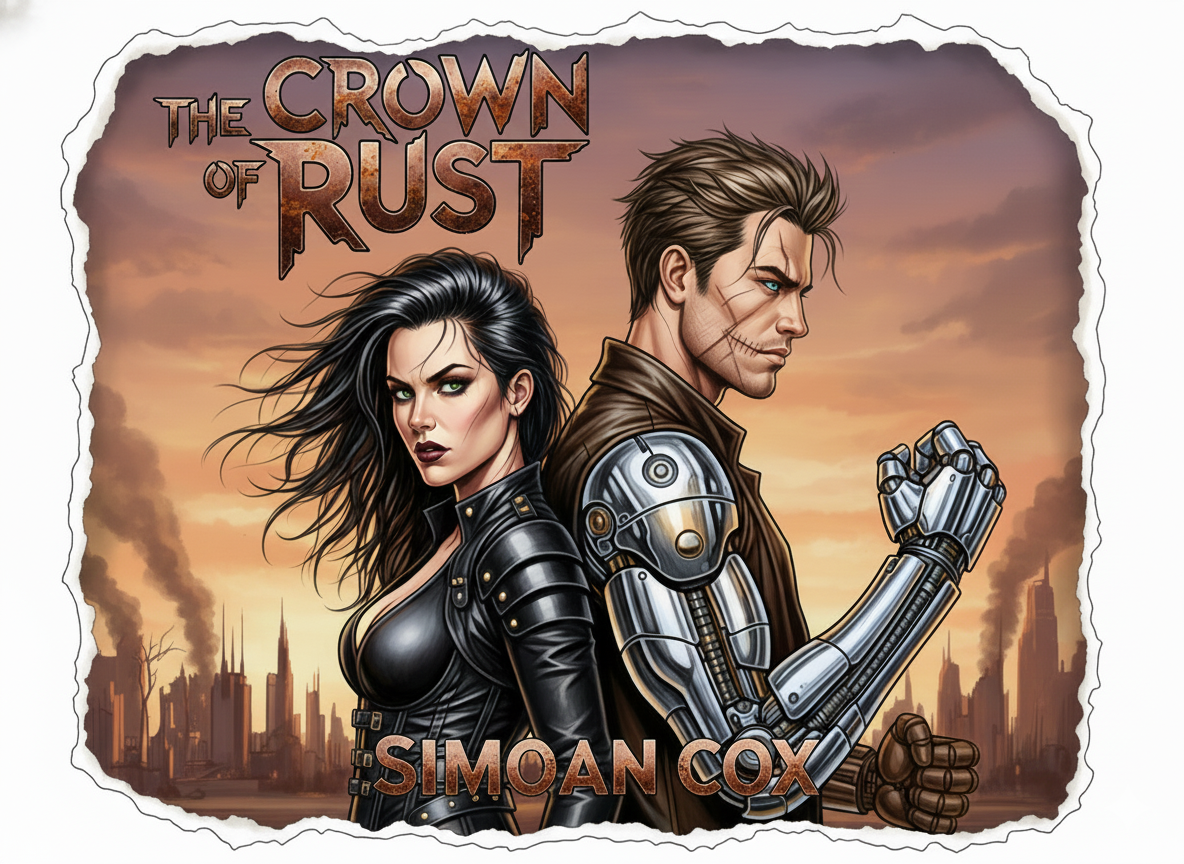
If Whispers in the Wire resonates, two companion volumes extend the conversation in different directions. The Crown of Rust is the long-form Shoufler fiction for readers who want to see the author’s storytelling muscle stretched across epic fantasy. Future Unveiled: The Societal Impact of Emerging Technologies is the nonfiction companion that engages, in a different register, with the brain-computer interface and AI questions the novel dramatizes.

Get the Book

Whispers in the Wire: A Supernatural Techno-Thriller by John Shoufler. 330+ pages, 53 chapters across four parts. Available in paperback and Kindle.

Explore more of John Shoufler’s catalog on his author page, or browse the full Shoufler family catalog for fiction, nonfiction, and everything in between.

Frequently Asked Questions

Who wrote Whispers in the Wire?

John Shoufler — Shoufler-catalog author whose nonfiction work in emerging tech and digital mental health threads through this novel’s premise.

What is Whispers in the Wire about?

A 53-chapter supernatural techno-thriller about Maya Carter, an ex-NeuroSync architect who finds a hidden biological signal in brain-interface code — and starts hearing her dead brother’s voice through a severed smart speaker. The novel opens at the Aurora Bridge in Seattle and builds out from there.

Is Whispers in the Wire pure sci-fi or does the supernatural element take over?

It threads them. The brain-computer interface details are written with technical credibility — Faraday-cage drives, loopback addresses, real interface hardware — and the supernatural layer emerges from the technology rather than overruling it.

Do I need a tech background to enjoy it?

No — the technical details serve the story. Readers who do know the tech will catch extra details (Cherry MX keyboards, 127.0.0.1, AURA speakers); readers who don’t won’t lose the plot.

Is this part of a series?

It’s a standalone novel. Other thrillers and fiction in the Shoufler catalog stand independently as well.

Related Reviews on BooksAndGuidesPro

Shatterproof by John Shoufler: When Life Breaks Everyone Else Review

“Shatterproof” doesn’t mean nothing can hit you. It means what hits you doesn’t break you in ways you can’t rebuild from. Shatterproof: When Life Breaks Everyone Else is John Shoufler’s 280+ page, 23-chapter handbook for the kind of resilience that holds up across decades — the kind built not from grand transformations but from small, sustainable, science-backed daily systems that keep working when the news is bad, the body hurts, the work is demanding, and the people around you are struggling.

The book pulls from neuroscience, sports psychology, behavioral economics, leadership research, and the FIRE (Financial Independence, Retire Early) movement to build a single integrated approach. Its working insight: most resilience advice fails because it asks too much. Shatterproof’s approach is to ask less per day, more consistently, in a way the brain and body can actually sustain.

About Shatterproof

Shatterproof: When Life Breaks Everyone Else runs 280+ pages across 23 chapters. The structure moves across the major domains where modern life puts pressure on people — physical movement, habits, recovery, leadership, emotional regulation, finance, focus, productivity, ritual, values, meaning — and gives each its own evidence-based chapter.

The book is heavily researched. Every chapter cites named studies, named researchers, named institutions — from the Journal of Psychiatric Research and Translational Psychiatry to Harvard psychiatrist John Ratey’s Spark, Bob Bowman’s coaching memoir on Michael Phelps, athlete-mental-health advocate Victoria Garrick’s documented recovery, and many others. The prose is plain; the evidence base is not.

Who This Book Is For

  • High-functioning adults who have been running on intensity-and-burnout cycles and want a sustainable replacement
  • Athletes, coaches, and physical-discipline practitioners rethinking the punitive frame they were trained in
  • Leaders and managers who need their own emotional regulation as durable as the systems they run
  • People navigating financial pressure who want a research-grounded path through scarcity into systematic wealth-building and generosity
  • Anyone in recovery from burnout, depression, or major life disruption who is rebuilding a daily operating system from the ground up
  • Parents trying to model resilience without modeling self-punishment

The 23 Chapters at a Glance

1. Making Exercise Effortless

The opening reframe. Exercise as medicine rather than punishment. The neuroscience of why even 10-15 minutes of moderate movement triggers measurable brain changes. The dose-response curve from Translational Psychiatry showing why “more is better” can backfire past 90 minutes per session.

2. Building Micro-Habits

The behavioral-architecture chapter. Why tiny consistent habits beat large inconsistent ones. Anchoring new behaviors to existing routines. The compounding effect of small daily improvements.

3. Excellence Through Simplicity

The case against complexity. Why removing decisions, options, and friction produces more durable performance than adding more tools and rules.

4. Recovery as Performance

The chapter elite athletes and coaches already understand. Recovery is not the opposite of work; it’s the part of work where adaptation happens. Sleep, rest days, and active recovery treated with the same seriousness as the training itself.

5. The Forge of Champions

What environments actually produce excellence over time. The structures, mentors, and cultures that turn raw effort into durable performance.

6. Movement as Medicine

The deeper dive on neuroscience. BDNF (brain-derived neurotrophic factor). The endorphin, norepinephrine, and dopamine cascade. Why exercise has been shown in some studies to match antidepressant medication for mild-to-moderate depression while producing lower relapse rates at follow-up.

7. Where Excellence Begins

The internal foundations. Identity, standards, and the daily disciplines that precede external achievement.

8. The Sacrifice Filter

Choosing what to give up. The frame for deciding which sacrifices are productive versus which are just suffering wearing the costume of discipline.

9. The Leadership Evolution

From technician to leader. The shifts in skill, identity, and time allocation that the transition requires.

10. The Art of Human Connection

Why durable performance depends on relational depth. The connection chapter that grounds the rest of the leadership material.

11. Emotional Regulation Under Pressure

The skill chapter. Specific techniques for staying steady when the stakes rise — drawn from sports psychology, clinical research, and military performance literature.

12. Breaking Mental Loops

Working with rumination, catastrophizing, and the recursive thought patterns that erode resilience. Cognitive tools and behavioral interrupts.

13. The FIRE Movement

The financial-resilience chapter introducing the Financial Independence, Retire Early framework — why it matters even for people who don’t intend to retire early.

14. Overcoming Scarcity

The psychology of scarcity and how it narrows attention, degrades decision-making, and traps people in short-term thinking. The path out.

15. Systematic Wealth Building

The mechanics. Compounding. Index investing. Tax-advantaged accounts. The boring, evidence-based path that outperforms most active strategies over decades.

16. Generosity and Safety Nets

Why generosity is part of resilience rather than the reward for it. Building margin into a life so giving and helping become possible.

17. Finding Flow States

The conditions under which deep, satisfying performance becomes accessible. Why flow is both a productivity tool and a mental-health intervention.

18. Systems Over Goals

The reframe popularized by Scott Adams and validated across behavioral research — goals describe destinations; systems describe daily actions. Systems are what actually move people.

19. Deep Focus in a Distracted World

The attention chapter. Why deep work has become a scarce resource and how to protect it against ambient digital noise.

20. Adaptive Productivity

The dynamic version of productivity systems — ones that bend with energy, circumstance, and season rather than demanding the same output every day.

21. Creating Meaningful Rituals

The role of ritual in stabilizing identity and energy. Morning routines, weekly reviews, seasonal practices — built for adherence, not display.

22. Values-Driven Transformation

The values clarification chapter. Why durable change has to be rooted in named values rather than imported expectations.

23. Finding Meaning Through Adversity

The integrative closing chapter. Drawing on the post-traumatic-growth literature and the broader meaning-making tradition. The argument that adversity, while never welcome, is also the substrate from which the deepest meaning often grows.

What Makes This Book Different

It refuses the punishment frame. Chapter 1 sets the tone — exercise as self-care rather than self-punishment, with citations to back it up. That refusal carries through the rest of the book. Discipline is not the opposite of kindness to yourself; in this framework, discipline is one of its forms.

It integrates physical, financial, emotional, and relational resilience. Most resilience books pick one domain. Shatterproof argues these domains are interconnected — financial scarcity drives chronic stress, chronic stress degrades physical health, degraded physical health degrades leadership capacity, and so on. The chapters reinforce each other.

It cites its evidence base. Specific studies. Specific researchers. Specific institutions. The reader can verify the claims rather than taking them on faith.

It takes recovery seriously. Chapter 4 (Recovery as Performance) and the broader emphasis on dose-response curves over maximum-effort thinking is the through-line that most performance books miss entirely.

It includes the financial chapters. Most resilience books treat money as someone else’s subject. The FIRE chapter, the scarcity chapter, the systematic wealth-building chapter, and the generosity chapter form a coherent financial-resilience block in the middle of the book that most genre entries lack.

About the Author

John Shoufler writes across personal development, technology, business, parenting, and the operational disciplines that hold lives together. A former U.S. Navy nuclear reactor operator with twenty-one years in commercial nuclear power, he holds a BS in Nuclear Engineering Technology from Excelsior College and an MBA from the University of Illinois. The operational background informs the book’s bias toward systems, redundancy, dose-response thinking, and procedures that hold up under stress.

Where This Book Sits in the Catalog

If Shatterproof resonates, two companion volumes extend the conversation. The Habit Code is the deep dive on the micro-habits and behavioral architecture Chapter 2 introduces. Hyperconnected: Navigating the Mental Health Crisis in a Digital World applies the same resilience frame to the specific pressures of the always-on digital environment.

Get the Book

Shatterproof: When Life Breaks Everyone Else by John Shoufler. 280+ pages, 23 chapters. Available in paperback and Kindle.

Explore more of John Shoufler’s catalog on his author page, or browse the full Shoufler family catalog for fiction, nonfiction, and everything in between.

Frequently Asked Questions

Who is the author of Shatterproof?

John Shoufler — Shoufler-catalog author whose related personal-development titles include The Habit Code and Rising Above.

What is Shatterproof about?

Twenty-three chapters on building durable resilience — the kind that holds up when life breaks everyone else around you. Coverage spans micro-habits, movement-as-medicine, financial systems, emotional regulation, deep focus, and meaningful rituals.

How is Shatterproof different from other resilience books?

Most resilience books are biography or philosophy. Shatterproof is closer to a system manual — twenty-three concrete practices grouped into a stack, with the explicit framing that resilience is built before the crisis, not during it.

Does the book cover financial resilience?

Yes — multiple chapters cover the financial-systems layer of resilience: emergency funds, income diversification, automated systems, and the financial preparation that buys time when the rest of life is breaking.

Should I read Shatterproof or The Habit Code first?

Read The Habit Code if you want the habit-design framework; read Shatterproof if you want the applied stack of resilience practices to install. Many readers do both.

Related Reviews on BooksAndGuidesPro

The Shadows of Hope by John Shoufler: Modern Slavery Review

The Thirteenth Amendment was ratified in 1865. Most Americans were taught, implicitly or explicitly, that this closed the chapter on slavery in the United States. The Shadows of Hope is John Shoufler’s 240+ page, 48-chapter argument that the chapter did not close — that the institution shed its physical infrastructure (auction blocks, plantations, overseers) and re-emerged inside a legal, economic, and digital architecture that does substantially the same work with substantially less visibility. The book is an attempt to make that architecture visible.

It is not a comfortable read, and it is not meant to be. It is a meticulously structured tour of how coercive labor in modern America gets supplied, controlled, monetized, and protected — industry by industry, legal loophole by legal loophole, control mechanism by control mechanism — and what abolitionist-style reforms could begin to dismantle it.

About The Shadows of Hope

The Shadows of Hope: Modern Slavery in the Land of the Free runs across 48 chapters organized into eight thematic parts, plus a selected bibliography. The structure is the argument: each part corresponds to one functional layer of how modern coercive labor operates, and the chapters within each part walk through the specific mechanisms, court cases, industries, and policy instruments involved.

The book draws on documentation from the United Nations Office on Drugs and Crime, the Polaris Project (operator of the U.S. National Human Trafficking Hotline), the U.S. Department of State, federal labor and immigration case law, and reporting from the industries it examines. The reference style is rigorous; the prose is plain.

Who This Book Is For

  • Policy researchers and advocates working on labor trafficking, wage theft, immigration enforcement, or supply-chain accountability
  • Law students and practitioners in labor law, immigration law, civil rights litigation, and prosecution
  • Journalists and documentarians investigating exploitation in agriculture, hospitality, construction, domestic work, and meat-processing
  • Faith communities, NGOs, and abolition organizations looking for a single-volume framework for the modern problem
  • Engaged citizens and consumers who want to understand what’s actually inside the supply chains they participate in
  • Educators teaching contemporary American studies, sociology of labor, or human rights

The Eight Parts at a Glance

Part I — The Trap (The Mechanics of Acquisition)

Seven chapters on how human beings are procured, groomed, and transported. The digital auction block (recruitment via Facebook, WhatsApp, Instagram, and LinkedIn). The psychology of the groomer. The economics of the smuggler. The debt contract. The journey as conditioning. Document theft. The “welcome” orientation that converts recruit into captive.

Part II — The Legal Shackles (Systemic Complicity)

Seven chapters on how American law makes the system possible. The Hoffman Plastic Compounds v. NLRB ruling and what it stripped from undocumented workers. The H-2A visa loophole. The independent-contractor sham. The subcontracting shield. The failures of OSHA enforcement. Local law enforcement as enforcers of employer power. The impossibility of civil court for victims.

Part III — The Plantation (Industry Deep Dives)

Nine chapters mapping where modern coercive labor actually lives. Florida tomato fields. Vermont and Wisconsin dairy barns. Southern poultry processing lines. Beef and pork slaughterhouses. Residential construction. Post-disaster recovery work. The hospitality underbelly. Domestic servitude. The intersection of labor trafficking with sex trafficking.

Part IV — The Control Mechanisms (Psychological Warfare)

Five chapters on how victims are kept in place once the physical journey is over. The threat of separation from family or children. Digital surveillance via confiscated phones and tracking. The company-store model that converts wages into perpetual debt. Toxic stress and its measurable effects on brain chemistry. Trauma bonding and Stockholm Syndrome dynamics in agricultural settings.

Part V — The Economics of Theft (Follow the Money)

Six chapters on who pays and who profits. The mechanics of wage theft. The tax gap created when workers are paid off the books. The healthcare subsidy that taxpayers cover when employers offload injury costs. The “cheap goods” lie — why consumer prices are not, in fact, lower because of this labor. The impact on native-born workers. The competitive disadvantage faced by employers who comply with the law.

Part VI — The Historical Mirror (The Argument)

Five chapters on the historical parallels that animate the book’s title and frame. Calhoun’s ghost. The Fugitive Slave Act compared with modern deportation regimes. Antebellum slave codes compared with modern immigration enforcement. The overseer compared with the modern foreman. Physical chains compared with paper chains.

Part VII — The Collateral Damage

Four chapters on the wider harms the system produces. The U.S.-citizen child of trafficked parents. The educational trauma absorbed by those children. The public-health risks that incubate inside under-regulated workplaces. The erosion of the rule of law that follows when entire industries depend on extralegal coercion.

Part VIII — The Abolition (Solutions)

Five concluding chapters on policy paths forward. The “Minnesota Model” treating wage theft as a felony. Funding the labor police adequately. Supply-chain transparency requirements. The Fair Food Program as a successful case study. Visa portability — letting workers leave abusive employers without losing legal status — as a single-lever reform with outsized impact. Followed by a selected bibliography.

What Makes This Book Different

The architectural lens. Most books on modern slavery profile victims, document abuses, or expose specific industries. The Shadows of Hope does that work — but it also steps back and shows how the pieces fit together as a system. Acquisition, legal cover, industry placement, psychological control, economic flows, historical parallel, collateral damage, and reform paths are treated as one integrated structure.

It names the legal architecture explicitly. Most exposés rely on victim stories. This book also documents the specific court rulings, statutes, regulatory failures, and visa structures that produce the conditions. Part II is essentially a legal-strategy chapter for anyone working on reform.

The industry depth is unusual. Part III’s nine chapters move through tomato fields, dairy barns, poultry lines, slaughterhouses, construction, disaster recovery, hospitality, domestic work, and sex trafficking — with enough specificity that the operating mechanics of each become legible.

It engages the historical analogy directly. Part VI doesn’t gesture vaguely at “modern slavery”; it works through the actual structural parallels — the Fugitive Slave Act versus deportation enforcement, slave codes versus immigration codes, overseer versus foreman, physical chains versus paper chains — and lets the reader judge the strength of each.

The solutions chapter is concrete. Part VIII gives specific policy levers with documented track records (the Minnesota wage-theft felony statute, the Fair Food Program in Florida tomato fields, visa portability proposals) rather than generic calls to “do something.”

About the Author

John Shoufler writes across politics, technology, business, personal development, and the systems-and-institutions questions that connect them. A former U.S. Navy nuclear reactor operator with twenty-one years in commercial nuclear power, he holds a BS in Nuclear Engineering Technology from Excelsior College and an MBA from the University of Illinois. The systems-engineering background informs the book’s approach — modern coercive labor is examined the way a complex industrial system is examined: inputs, throughput, control loops, failure modes, and intervention points.

Where This Book Sits in the Catalog

If The Shadows of Hope resonates, two companion volumes extend the conversation. Trump, Musk & Doge: From Swamp to Cyberspace – Reprogramming Government takes the systems-level look at federal administrative reform that any anti-trafficking enforcement work has to engage with. Future Unveiled: The Societal Impact of Emerging Technologies covers the digital-platform architecture that the book’s opening chapters identify as the new auction block.

Get the Book

The Shadows of Hope: Modern Slavery in the Land of the Free by John Shoufler. 240+ pages, 48 chapters across eight parts, plus selected bibliography. Available in paperback and Kindle.

Explore more of John Shoufler’s catalog on his author page, or browse the full Shoufler family catalog for fiction, nonfiction, and everything in between.

Frequently Asked Questions

Who wrote The Shadows of Hope?

John Shoufler — Shoufler-catalog author whose other long-form nonfiction includes Trump, Musk & Doge and Shatterproof.

What is The Shadows of Hope about?

A 48-chapter, 8-part investigation of modern slavery in the United States — labor trafficking, sex trafficking, the digital auction block on encrypted platforms, the legal loopholes that protect traffickers, industry-by-industry deep dives, and the policy paths toward abolition.

Is the book documentary-style or narrative?

Both — chapters move between investigative reporting on specific industries (agriculture, hospitality, domestic work, construction) and the policy and legal architecture that allows them to persist.

Does it cover what readers can actually do?

Yes — the closing part on abolition covers consumer due diligence, policy advocacy, the role of NGOs, and the federal and state legislation in motion.

Why does modern slavery still exist in the U.S.?

The book traces it to legal loopholes (the 13th Amendment exception, prison labor, the H-2A and H-2B visa systems), enforcement gaps, fragmented jurisdiction, and the platforms that have moved exploitation online faster than law has adapted.

Related Reviews on BooksAndGuidesPro

Rising Above by John Shoufler: Climate Anxiety Guide Review

You feel a flicker of unease when daffodils bloom three weeks early. A pang of worry when a storm levels a community a thousand miles away. A quiet, gnawing sense that something about the seasons, the soil, the headlines is fundamentally off. There’s now a name for that cluster of feelings — climate anxiety, sometimes called eco-anxiety — and the people experiencing it are no longer a fringe. Rising Above is John Shoufler’s 300+ page, fifteen-chapter guide to understanding climate anxiety, building emotional tools to manage it, connecting with others who share the concern, and sustaining hope across a problem that has no fixed finish line.

The book’s premise is honest from the first page: climate anxiety is not a flaw, not a weakness, not an overreaction. It’s a signal that you care about something real. The work is learning to listen to that signal without being paralyzed by it — and to convert the underlying values into action, community, and lasting hope.

About Rising Above

Rising Above: A Practical Guide to Overcoming Climate Anxiety and Finding Hope in a Changing World runs 300+ pages across fifteen chapters organized into four parts, plus an epilogue and a substantial appendix of worksheets, resources, and a glossary. The structure is deliberately therapeutic in shape — moving from naming the experience, through emotional tools, to community, and finally to long-term sustained hope as a daily practice.

The book treats climate anxiety as both a personal psychological experience and a moral signal. It draws on emerging research, real coping strategies, intergenerational wisdom, and frameworks borrowed from cognitive behavioral practice, mindfulness, community organizing, and ecological systems thinking — without ever requiring the reader to subscribe to any single school.

Who This Book Is For

  • People who have a name now for what they’ve been feeling — and want to understand it before deciding what to do with it
  • Parents who are trying to raise children honestly in a changing world without transferring their own dread
  • Teenagers and young adults whose climate anxiety is often more acute because they’re the cohort that will live longest with the consequences
  • Educators and mental health professionals looking for a frame and a vocabulary for the climate-related distress showing up in classrooms and clinical practice
  • Activists and organizers who feel the burnout and need tools for sustaining engagement across decades, not months
  • People on the frontlines of climate disruption — coastal residents, farmers contending with failing harvests, communities recovering from disaster — who carry an acute, embodied version of the anxiety

The Fifteen Chapters at a Glance

Part I — Understanding Climate Anxiety

Chapter 1: Naming the Feeling. Defining climate (eco)anxiety and its signs. The spectrum of emotional responses to a diffuse, ongoing crisis. How climate anxiety differs from a generalized anxiety disorder and from ordinary stress.

Chapter 2: Why Are We So Anxious? The roots — evolutionary, psychological, cultural, informational. Why our brains, wired for immediate dangers, struggle with slow-moving global threats.

Chapter 3: How It Affects Us Day-to-Day. The lived experience. Sleep. Decision-making. Work. Relationships. Food and consumption choices. The intermittent grief at the edges of an ordinary day.

Chapter 4: Context from the Past and Around the World. Historical responses to ecological disruption. Cross-cultural framings of human-nature relationships. The Indigenous, religious, and philosophical traditions that have wrestled with versions of this question long before “eco-anxiety” entered the vocabulary.

Part II — Finding Emotional Ground

Chapter 5: Immediate Relief When Fear Spikes. The acute toolkit. Breathwork. Grounding techniques. Boundaries on media consumption. What to do in the moment when a headline triggers panic.

Chapter 6: Reframing Your Thoughts. Cognitive tools for working with catastrophizing, self-blame, and despair. Distinguishing realistic concern from cognitive distortion.

Chapter 7: Building Lasting Resilience. The longer-arc practices. Habits and routines that sustain emotional steadiness across years of difficult news.

Part III — Strength in Numbers: Connecting with Others

Chapter 9: Breaking Isolation Through Community. Climate anxiety isolates. Connection re-grounds. The forms community can take — local sustainability groups, faith-based initiatives, online forums, neighborhood mutual-aid networks.

Chapter 10: Honest, Compassionate Communication. Talking about climate with friends, family, partners, and children — including people who minimize or deny. How to share what you feel without alienating or moralizing.

Chapter 11: Turning Anxiety into Collective Action. The pivot from feeling to doing. How to choose engagement that matches your values, your capacity, and the moment — without burning out.

Part IV — Sustaining Hope and Engagement Over Time

Chapter 12: Recognizing Progress and Celebrating Wins. The discipline of noticing what’s working. Renewable-energy milestones, policy victories, community successes — the data points that keep despair from becoming the default frame.

Chapter 13: Hope as a Practice, Not a Fantasy. “Active hope” — the deliberate stance that acknowledges difficulty while affirming that our choices matter. Hope as a discipline rather than a feeling.

Chapter 14: Learning from Nature’s Resilience. What ecosystems teach us about recovery, adaptation, and cyclical renewal. The biological models for human emotional resilience.

Chapter 15: A Lifelong Journey of Caring. The closing chapter. Integrating climate concern into a full life across decades. Mentoring the next generation. Updating your toolkit as the world changes.

Epilogue: Embracing Complexity, Choosing Courage

The send-off. The acknowledgment that there’s no clean resolution — and the affirmation that engaged, honest, hopeful action is still the right response.

The Appendices

The book’s appendix is large and practical. It includes worksheets (reframing anxious thoughts, tracking emotional states, embracing complexity and uncertainty, mentoring and intergenerational wisdom exchange, updating your coping toolkit), curated lists (organizations and initiatives, books offering moral depth and hope, podcasts, online communities), guidance on using these resources mindfully, tables and charts to customize your use, an information-action cycle chart, and a glossary of key terms.

What Makes This Book Different

It validates the emotion without leaving you stuck in it. Many climate books either deny the anxiety (technocratic optimism) or wallow in it (doomerism). Rising Above stays steady — naming the feeling, working with it, and converting it into engagement.

It takes the moral dimension seriously. The book treats climate anxiety as partly a moral and ethical response, not just a clinical one. The unease you feel is connected to values around fairness, intergenerational responsibility, and care for living systems. Honoring that connection is part of the healing.

It’s a toolkit, not a program. The four arcs — understanding, coping, connecting, sustaining hope — interweave and loop back on each other. The reader picks what fits, discards what doesn’t, and returns to the book repeatedly as circumstances change.

It addresses the long-arc problem. Climate work is a marathon with no finish line. Chapters 12 through 15 (and the appendix worksheets on updating your toolkit) are explicitly built for sustaining engagement across decades — the part most books skip entirely.

It honors community. Part III is not a token. The book treats isolation as one of the central drivers of climate-anxiety severity, and the community chapters offer concrete pathways out of it.

About the Author

John Shoufler writes across personal development, technology, parenting, business, and the operational disciplines required to navigate complex challenges. A former U.S. Navy nuclear reactor operator with twenty-one years in commercial nuclear power, he holds a BS in Nuclear Engineering Technology from Excelsior College and an MBA from the University of Illinois. The engineering background informs the book’s discipline — systems thinking, multi-layer problem decomposition, and the refusal to either oversimplify or be overwhelmed by complexity.

Where This Book Sits in the Catalog

If Rising Above resonates, two companion volumes extend the conversation. Off the Grid: A Complete Guide to Modern Nomadic Living is the practical companion for readers whose climate engagement leads toward greater personal resource independence. Hyperconnected: Navigating the Mental Health Crisis in a Digital World applies the same frame to a different chronic-stress source — the always-on digital environment.

Get the Book

Rising Above: A Practical Guide to Overcoming Climate Anxiety and Finding Hope in a Changing World by John Shoufler. 300+ pages, 15 chapters across four parts, plus epilogue and appendices. Available in paperback and Kindle.

Explore more of John Shoufler’s catalog on his author page, or browse the full Shoufler family catalog for fiction, nonfiction, and everything in between.

Frequently Asked Questions

Who is the author of Rising Above?

John Shoufler — Shoufler-catalog author whose related nonfiction includes Hyperconnected and Off the Grid.

What is Rising Above about?

A 15-chapter practical guide to climate anxiety, organized in four parts: understanding what climate anxiety is, coping tools that actually work, building local community for collective action, and sustaining hope as a daily practice.

Is climate anxiety a real diagnosis?

It’s an emerging clinical concept — sometimes called eco-anxiety or solastalgia — recognized by major psychological associations as a real, growing form of distress, even if it isn’t a standalone DSM diagnosis. The book covers the terminology and where the field is.

Does the book lean toward despair or false optimism?

Neither. It treats the science as serious without being paralyzing, and it treats action as necessary without being naive about what individuals can do alone.

Is Rising Above appropriate for teens or young adults?

Yes — the coping-tools and community sections are particularly useful for younger readers who carry the heaviest climate anxiety load and need durable practices rather than one-off motivation.

Related Reviews on BooksAndGuidesPro

Trump, Musk & Doge by John Shoufler: From Swamp to Cyberspace Review

The Department of Government Efficiency — DOGE — moved from campaign-trail rhetoric to operating reality faster than any modern American reform initiative. Whatever your politics, the question of whether a brash political figure and a disruptive technologist could actually restructure how the federal government works is one of the defining questions of the decade. Trump, Musk & Doge: From Swamp to Cyberspace – Reprogramming Government is John Shoufler’s ten-chapter, 270+ page chronicle and analysis of that experiment — its origin, its tactics, its legal and constitutional friction, its political backlash, and what it tells us about the future of public administration in a digital age.

The book takes a deliberate dual-perspective stance. Every chapter pairs the supportive view (DOGE as overdue revolution against entrenched bureaucratic decay) with the critical view (radical disruption risking constitutional norms and institutional capacity). The result is a reading experience that respects the reader enough to surface both sides rather than preach one.

About Trump, Musk & Doge

Trump, Musk & Doge: From Swamp to Cyberspace – Reprogramming Government runs 270+ pages across ten chapters plus a long introduction. The structure moves chronologically and thematically from the political conditions that produced the initiative, through its design and rollout, into the legal battles and political reactions it triggered, and finally outward to international perspectives and the broader implications for how governments operate in a technological era.

What sets the book apart from typical political commentary is the systems-and-administration lens. The author treats DOGE not just as a political story but as an administrative-reform case study — what worked operationally, what stalled, where the technological tools delivered, where they hit constitutional or capacity limits, and what other reform efforts in other countries can learn from it.

Who This Book Is For

  • Engaged citizens who want a single-volume framing of one of the most consequential political experiments of the era, told without partisan filter
  • Public administration students and scholars looking for a contemporary case study in technology-driven government reform
  • Policy and political-strategy professionals tracking how disruptive initiatives navigate legal and institutional friction
  • Technologists and civic-tech advocates interested in where digital tooling can actually move the needle on government efficiency, and where it cannot
  • International observers trying to understand whether the American DOGE experiment offers a model — or a cautionary tale — for reform efforts elsewhere

The Ten Chapters at a Glance

1. The Genesis of DOGE

How the Department of Government Efficiency went from rhetorical idea to formal initiative. The political conditions that produced it. The pivotal meetings between Trump and Musk where the operating vision took shape. The early framing of DOGE as both administrative overhaul and fundamental reimagining of governance.

2. Vision and Objectives

The stated mission, the operational goals, and the metrics that DOGE proposed to measure itself against. Cutting waste, exposing corruption, leveraging data analytics and decentralized oversight, building real-time transparency dashboards, opening federal spending to public scrutiny. The chapter that lays out what the initiative said it intended to do.

3. Implementation Tactics

How the vision met operational reality. The audit methodology. The technology stack. The use of cutting-edge data analytics to surface waste. The decentralized oversight mechanisms. The communications strategy. The deliberate operational tempo.

4. Legal and Constitutional Battles

Where DOGE collided with the existing structures of American governance. Separation of powers questions. Civil service protections. The legal challenges from agencies, employees, advocacy groups, and state attorneys general. The constitutional friction that any rapid administrative restructuring inevitably encounters.

5. Political and Social Reactions

The supportive coalition and the opposing coalition. Public polling. Media coverage. The reactions from career civil servants, contractors, and the broader federal workforce. The cultural and partisan splits the initiative widened and the unexpected alliances it produced.

6. Legacy and Lessons Learned

What endures after the initial wave of attention recedes. Which reforms stuck, which were rolled back, and which left a procedural residue that future administrations will work with or against. The administrative lessons for any future reform effort regardless of political alignment.

7. Technological Innovations & Government Reform

The technology chapter. AI for fraud detection and pattern surfacing. Blockchain for transaction transparency. Real-time dashboards for budget tracking. The promise and the limits of digital tooling applied to the operational complexity of federal agencies. Where the tech actually delivered measurable efficiency and where it ran into legacy systems and human-process bottlenecks.

8. International Perspectives and Global Impact

How other governments watched the DOGE experiment. The British, European, and Asia-Pacific reform conversations it influenced. The international comparison — which other countries have attempted technology-driven administrative reform, what their outcomes were, and what the American experiment looks like in that broader context.

9. The Future of Public Administration

The forward-looking chapter. The structural questions DOGE forced into the open even where it didn’t resolve them. Hybrid models of governance. The role of permanent civil-service institutions versus appointed reform teams. The integration of private-sector operational disciplines with public-sector accountability requirements.

10. Toward a New Era of Governance

The synthesis. What the DOGE moment means for the relationship between citizens, the federal government, and the technologies that increasingly mediate that relationship. The principles that any future reform — left, right, or technocratic — will likely have to engage with.

What Makes This Book Different

The dual-perspective structure. Every consequential moment is examined from both supportive and critical viewpoints, named explicitly in the chapter structure. The book trusts the reader to weigh both rather than choosing for them. That structural commitment to even-handedness is what separates it from the partisan commentary that dominates the genre.

It treats DOGE as an administrative case study, not just a political story. The legal and constitutional chapter, the technology chapter, the implementation-tactics chapter, the international-comparison chapter — these are public-administration questions, and the book engages them as such rather than as scoring opportunities.

It addresses the technological substrate seriously. Chapter 7 doesn’t hand-wave the role of AI, blockchain, and analytics platforms in the reform effort. It examines what the tools actually did, where they delivered, and where they bumped up against the messy reality of legacy federal systems.

It looks outward. Chapter 8’s international perspective places DOGE in a global context of government-reform experiments, which is the kind of comparative framing most domestic political books skip entirely.

About the Author

John Shoufler writes across politics, technology, business, and the operational disciplines required to run institutions of any scale. A former U.S. Navy nuclear reactor operator with twenty-one years in commercial nuclear power, he holds a BS in Nuclear Engineering Technology from Excelsior College and an MBA from the University of Illinois. The operational background shapes the book’s approach — administrative reform is examined the way a reactor operator examines a plant overhaul: systems, interfaces, failure modes, recovery procedures, and lessons learned.

Where This Book Sits in the Catalog

If Trump, Musk & Doge resonates, two companion volumes extend the conversation. Future Unveiled: The Societal Impact of Emerging Technologies covers the broader technological context — AI, blockchain, and digital infrastructure — that any modern government-reform effort has to navigate. Mastering Social Media Management applies a complementary lens to one of the digital domains where political and institutional power increasingly play out.

Get the Book

Trump, Musk & Doge: From Swamp to Cyberspace – Reprogramming Government by John Shoufler. 270+ pages, 10 chapters plus introduction. Available in paperback and Kindle.

Explore more of John Shoufler’s catalog on his author page, or browse the full Shoufler family catalog for fiction, nonfiction, and everything in between.

Frequently Asked Questions

Who wrote Trump, Musk & Doge?

John Shoufler — Shoufler-catalog author whose related nonfiction includes Future Unveiled and Rising Above.

What is Trump, Musk & Doge about?

Ten chapters on the Department of Government Efficiency (DOGE) — how it formed, the politics and personalities behind it, the tactics deployed, the legal challenges, the technology stack, and the lessons it suggests for the next era of public administration.

Is the book partisan?

It’s analytical, not cheerleading or hit-piece. The book covers what was attempted, what worked, what didn’t, and what precedent it sets — and it draws lessons that apply regardless of which party next inherits the playbook.

Does it cover the legal battles around DOGE?

Yes — a dedicated chapter walks through the major court challenges, the constitutional questions, and the executive-versus-legislative tension the initiative exposed.

Will this book age well?

The book frames durable lessons about government efficiency, executive ambition, and the limits of disruption applied to public institutions — themes that outlive any single administration.

Related Reviews on BooksAndGuidesPro

Beyond the Nose by John Shoufler: Smell, Memory & Mood

A breeze carries the smell of fresh bread past you on a busy street, and you’re suddenly back in your grandmother’s kitchen at age six. That’s not a poetic flourish — it’s neuroscience. Unlike sight and sound, which route through the thalamus before reaching their cortical processing areas, smell takes a direct neural shortcut to the amygdala (where emotion lives) and the hippocampus (where autobiographical memory lives). That direct wiring is why scent triggers memories that feel more vivid, more emotional, and more uncontrollable than any photograph could. It’s the Proustian effect, named for Marcel Proust’s madeleine — and it’s the through-line of Beyond the Nose.

John Shoufler’s 160+ page guide to the science, psychology, and practical application of the sense of smell is a tour of the most underappreciated of the five senses — the one most people move through life barely consciously aware of, despite the fact that it shapes their food preferences, their attraction patterns, their stress levels, their sleep, their memory, and their mood.

About Beyond the Nose

Beyond the Nose: How Our Sense of Smell Transforms Memory, Mood, and Daily Life runs across three parts and twelve chapters. Part 1 establishes the foundations of olfaction — the science, the anatomy, the connection between scent and memory and mood. Part 2 examines the impact of scent on daily life — attraction, appetite, health, society, cognition. Part 3 turns toward practical application — creating a scented home, using scent for sleep and stress and focus, and the structured exercises of “smell training” to enhance your own olfactory ability.

The book treats olfaction as both a serious scientific subject and a practical, accessible one. The chapters move from the neuroscience of receptor binding (humans have hundreds of olfactory receptor types and may be able to discriminate over a trillion distinct odors) to applied questions like which scents actually help with sleep, which boost productivity, and how to do basic smell training at home.

Who This Book Is For

  • Curious general readers who want to understand a sense they use thousands of times a day without thinking about it
  • People who have lost smell (anosmia from COVID, injury, aging, infection) and are looking for evidence-based recovery exercises
  • Aromatherapy and wellness practitioners looking for the grounded science behind the practice
  • Designers, marketers, and creators of physical spaces — retail, hospitality, residential design, brand experiences — where ambient scent shapes how people feel and behave
  • Foodies and home cooks who realize that what we call “taste” is mostly smell, and want to develop their olfactory palate
  • Caregivers and clinicians interested in the emerging link between olfactory decline and early indicators of Parkinson’s or Alzheimer’s

The Twelve Chapters at a Glance

Part 1 — The Foundations of Olfaction

Chapter 1: The Nose Knows. The underappreciated sense. A journey through the olfactory system (turbinates, olfactory epithelium, receptor neurons, cribriform plate, olfactory bulb). The evolution of smell — older than vision in many primitive life forms. The individuality of smell — why two people perceive the same odor differently based on genetics and exposure.

Chapter 2: The Science of Scent. What an odor actually is. The language of scent — odor profiling and classification. The art and science of perfumery. The widespread use of scent across industries — from food and beverage to retail marketing to product design.

Chapter 3: Smell and Memory — The Proustian Effect. The neuroscience of scent and memory. Childhood scents and nostalgia. Scent and place. Why a smell can drop you decades into your past with a precision no photograph can match.

Chapter 4: Smell, Emotion, and Mood — The Unseen Influence. The limbic connection. Scent and stress reduction. Scent and mood enhancement. The dark side — how negative emotions and aversions form around specific smells.

Part 2 — The Impact of Scent on Our Lives

Chapter 5: Scent and Attraction — The Biology of Love and Lust. Pheromones — what the research actually shows and what’s still speculation. The smell of compatibility, including the link between Major Histocompatibility Complex markers and subconscious mate preference. The role of perfume in attraction.

Chapter 6: Scent and Appetite — The Flavor Connection. The difference between taste and flavor (most of what we call “taste” is actually smell perceived retronasally). The psychology of food cravings. Smell loss and appetite. The future of food and scent — including how anosmia from COVID has reshaped the field.

Chapter 7: Scent and Health — From Aromatherapy to Medical Diagnosis. Aromatherapy beyond relaxation. The scent of disease — emerging research on how certain medical conditions alter a person’s odor profile. Smell and mental health.

Chapter 8: Scent and Society — Cultural and Social Dimensions. The scent of cleanliness and hygiene. Scent and ritual (incense, ceremony). Scent and identity. The ethics of scent — including the manipulative dimensions of scent marketing and the debates around fragrance-free public spaces.

Chapter 9: Scent and Cognition — Focus, Alertness, and Performance. The impact of scents on alertness and attention. Scent and memory enhancement. Scent and creativity.

Part 3 — Harnessing the Power of Scent

Chapter 10: The Scented Home. Scent-zoning your home. Natural versus synthetic scents. DIY scent blending. Scent and mindfulness.

Chapter 11: Scent and Well-being — Practical Applications. Scent for better sleep. Scent for stress management. Scent for enhanced focus and productivity. Scent and social connection.

Chapter 12: Smell Training — Exercises to Enhance Your Olfactory Abilities. Why train your sense of smell. Basic smell training techniques. Advanced exercises. Resources and support — including the structured smell-training protocols recommended for people recovering from smell loss.

What Makes This Book Different

It treats smell as a serious neuroscience subject. The book grounds itself in current olfactory research — receptor diversity, the cribriform plate, the olfactory bulb’s topographic mapping via glomeruli, the direct limbic routing. It doesn’t dumb the biology down, but it doesn’t make it inaccessible either.

It addresses smell loss substantively. Anosmia became a household word during the COVID-19 pandemic, and the recovery research has accelerated dramatically. Chapter 12’s coverage of smell training — the structured exercises proven to help restore olfactory function — is essential reading for anyone affected.

It’s both science and practice. Part 1 gives you the foundation. Part 2 shows you how olfaction shapes domains you didn’t realize it was shaping. Part 3 turns the whole thing into a practical toolkit for your home, your sleep, your focus, your social life.

It takes the cultural and ethical dimensions seriously. Scent marketing as manipulation. Fragrance-sensitivity politics. The ethics of using ambient scent in retail and hospitality to influence purchasing behavior. The environmental footprint of large-scale fragrance production. Chapter 8 doesn’t dodge any of it.

About the Author

John Shoufler writes across science, technology, personal development, and the spaces where they intersect. A former U.S. Navy nuclear reactor operator with twenty-one years in commercial nuclear power, he holds a BS in Nuclear Engineering Technology from Excelsior College and an MBA from the University of Illinois. The scientific training shows up in how the book handles the neurobiology — accurately, accessibly, and without overclaiming what the research actually supports.

Where This Book Sits in the Catalog

If Beyond the Nose resonates, two companion volumes extend the conversation. The Habit Code shows how the kind of cue-routine-reward science the book draws on applies to the broader habits that shape daily life. Digital Balance applies the same sensory-systems thinking to the question of how technology hijacks attention and how to reclaim it.

Get the Book

Beyond the Nose: How Our Sense of Smell Transforms Memory, Mood, and Daily Life by John Shoufler. 160+ pages, 12 chapters across three parts. Available in paperback and Kindle.

Explore more of John Shoufler’s catalog on his author page, or browse the full Shoufler family catalog for fiction, nonfiction, and everything in between.

Frequently Asked Questions

Who is the author of Beyond the Nose?

John Shoufler — Shoufler-catalog author whose nonfiction also covers ADHD, digital wellness, and personal development.

What is Beyond the Nose about?

Twelve chapters on the neuroscience of olfaction — how smell links to memory and mood through the limbic system, why a single scent can return you to a childhood moment, and how smell influences attraction, appetite, and decision-making.

Does the book cover smell loss and recovery?

Yes — there’s coverage of anosmia (including post-viral smell loss), the science behind smell training, and the protocols clinicians are using to help patients rebuild olfactory function.

Is aromatherapy science covered honestly?

Yes — the book takes aromatherapy seriously where the evidence supports it, and is plain about where the marketing has outrun the research. It’s neither dismissive nor uncritical.

Why does the sense of smell deserve a whole book?

Because smell is the only sense wired directly into the limbic system without thalamic relay — which means it bypasses conscious filtering and goes straight to memory, mood, and emotion. That single wiring difference is why a passing scent can unlock decades-old memory in a way no other sense can.

Related Reviews on BooksAndGuidesPro