Blog

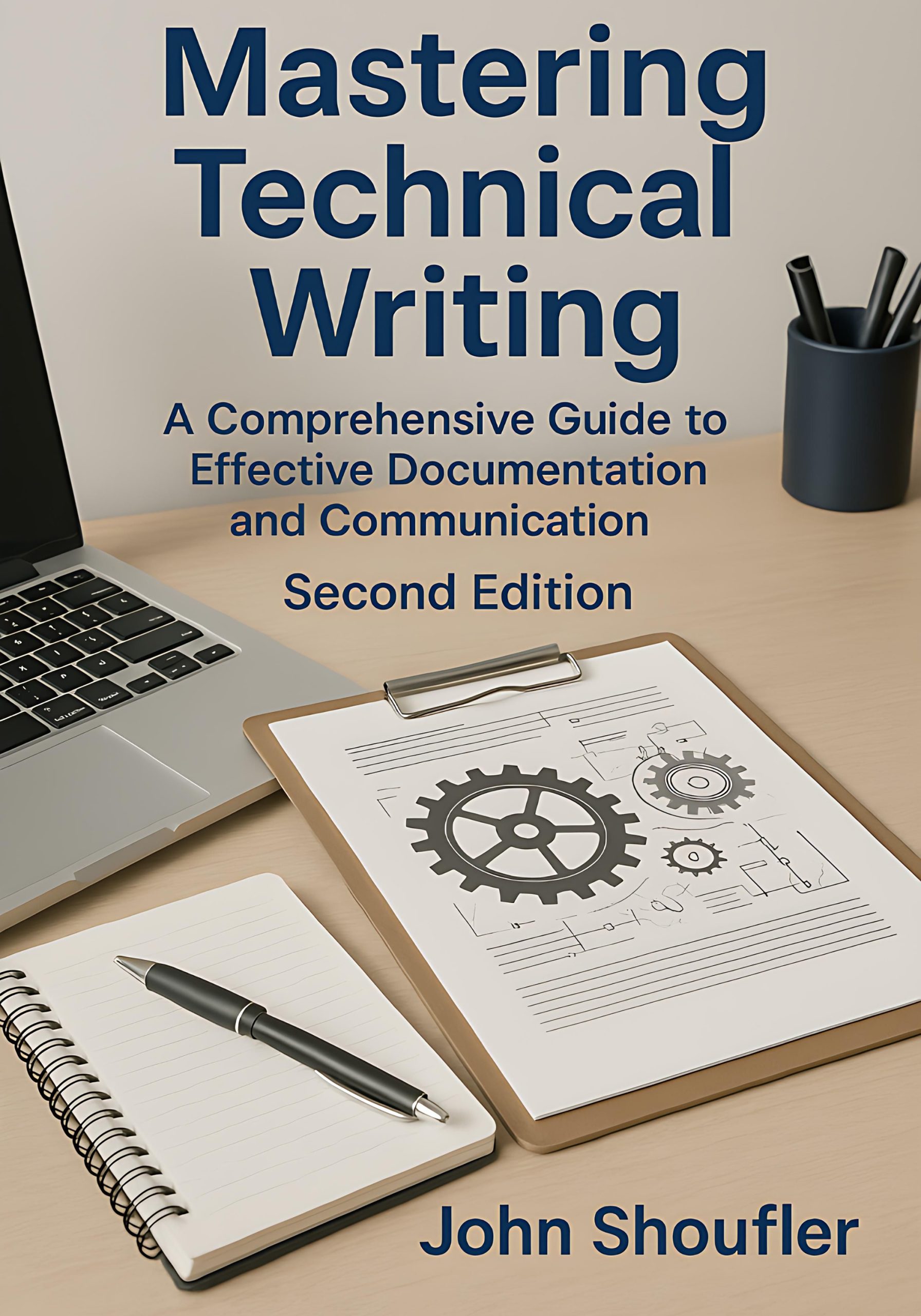
Mastering Technical Writing 2nd Ed by John Shoufler: Review

Technical writing has quietly become one of the most valuable skills in the modern economy. As products grow more complex, software ships faster, APIs proliferate across industries, and AI assistants reshape how customers find answers, the demand for clear, precise, user-centered documentation has never been higher — and the supply of writers who can deliver it remains stubbornly thin. That gap is exactly what John Shoufler set out to close with the second edition of his comprehensive guide.

If you write product manuals, API references, knowledge-base articles, SOPs, training material, or any document where someone has to do something based on what you wrote, this book is a field manual you’ll keep within arm’s reach.

About Mastering Technical Writing (Second Edition)

Mastering Technical Writing: A Comprehensive Guide to Effective Documentation and Communication is a 411-page complete re-write of John Shoufler’s original technical writing guide, restructured in response to direct reader feedback. Every chapter now stands on its own — you can dip in at “Editing and Quality Assurance” without first reading “Foundations,” or jump straight to “API and Developer Documentation” if that’s the gap you’re trying to close.

It’s a holistic book by design. Where most technical writing guides narrow in on a single industry — software, healthcare, regulatory — this one treats technical writing as an integrated discipline that shows up across technology, healthcare, engineering, finance, and beyond. The principles transfer; only the subject matter changes.

Who This Book Is For

The Second Edition is built around six distinct reader profiles:

  • Complete beginners — anyone curious about technical writing, with zero prior experience required
  • Intermediate writers — practicing documentation specialists who want to formalize what they know and fill specific gaps
  • Advanced practitioners — senior writers and content strategists looking for cutting-edge practices and leadership frameworks
  • Career changers — engineers, scientists, IT professionals, and teachers pivoting into technical communication
  • Subject matter experts — engineers, doctors, and analysts who need to document their work effectively without becoming full-time writers
  • Documentation managers — team leads building processes, standards, and onboarding material for their teams

The book opens with a self-assessment skills inventory across five dimensions — core writing, technical knowledge, document design, tools, project skills, and strategic skills. You score yourself 1–5 on each, then use the result to plan a custom path through the chapters instead of reading cover-to-cover.

The 21 Chapters at a Glance

The Second Edition is organized into 21 chapters across roughly seven thematic clusters:

1. Foundations (Chapters 1–3)

Foundations of Technical Writing, Understanding Your Audience, and The Technical Writing Process establish the core principles that don’t change with platform or industry: who are you writing for, what do they need to accomplish, and what’s the disciplined process for taking it from blank page to published document.

2. Craft (Chapters 4–6)

Structuring Technical Documents, Clarity in Technical Writing, and Visual Communication dig into the writing itself — how to organize complex information, write sentences that don’t require a re-read, and use diagrams, screenshots, and page design to carry weight that words alone can’t.

3. Document Types (Chapters 7–8)

Documentation Types and Best Practices and Writing for Different Technical Fields walk through the specific genres — user guides, reference manuals, release notes, SOPs, white papers, training material — and the conventions of writing for software, hardware, healthcare, life sciences, finance, and other domains.

4. Tools and Research (Chapters 9–11)

Documentation Tools and Technologies, Research Skills for Technical Writers, and Editing and Quality Assurance cover the practical machinery of the job: authoring environments, content management systems, source-control workflows, how to extract reliable information from busy SMEs, and how to edit your own and other people’s work without missing things.

5. Modern Workflow (Chapters 12–15)

Technical Writing in Agile Environments, Content Strategy, Localization and Global Content, and Technical Writing and User Experience address how the profession has shifted — from waterfall to agile, from standalone documents to managed content systems, from monolingual to global, and from “the docs team” to embedded contributors on UX and product teams.

6. Specialization (Chapters 16–18)

API and Developer Documentation, Multimedia and Interactive Documentation, and Documentation Management go deep on three of the highest-growth specializations: writing for developers, producing video and interactive learning content, and managing documentation portfolios at scale.

7. Career and Future (Chapters 19–21)

Technical Writing Careers, Advanced Technical Communication, and Emerging Trends and Technologies close the book by mapping out the career landscape — entry-level roles, mid-career specializations, leadership tracks — and looking ahead at AI content design, augmented reality documentation, and other roles that didn’t exist a few years ago.

The 9 Ready-to-Use Templates

One of the most quietly valuable parts of the Second Edition is the appendix section — nine templates and reference tools you can lift straight into your work:

  1. Document Planning Template — for scoping a new documentation project before you write a word
  2. Technical Document Review Checklist — for editing your own drafts or reviewing someone else’s
  3. User Guide Template — a structural skeleton for any end-user-facing manual
  4. API Documentation Template — endpoints, parameters, examples, errors, authentication
  5. Standard Operating Procedure (SOP) Template — step-by-step procedures for regulated or repeatable work
  6. Technical Writing Project Checklist — for managing a documentation engagement from kickoff to handoff
  7. Style Guide Template — starter rules for tone, terminology, voice, and formatting
  8. Glossary of Technical Writing Terms — vocabulary every writer should know
  9. Technical Writing Tools Comparison Charts — side-by-side reference for authoring tools, CMSs, and platforms

Each chapter also ends with practical exercises so the book functions as both a reference text and a self-paced course.

Where Technical Writing Is Going

The Second Edition gives sustained attention to seven shifts reshaping the profession:

  • From print to digital — search-driven, non-sequential consumption replacing linear reading
  • From comprehensive to just-in-time — getting users the exact answer at the moment of need, not a 300-page manual
  • From waterfall to agile — documentation written in sprints alongside engineering, not after
  • From isolated documents to content systems — single-sourcing, structured authoring (DITA, DocBook), reusable components
  • From text to multimedia — video tutorials, interactive simulations, augmented-reality overlays
  • From centralized to collaborative — writers as facilitators of content built with developers, support, and users
  • From local to global — simplified English, translation-friendly writing, real localization workflows

If you’ve been writing technical documentation the way it was taught a decade ago, this section alone is worth the price of the book.

Career Paths in Technical Writing

Chapter 19 doubles as a career roadmap for anyone considering technical writing as a profession or trying to figure out their next move:

Entry-level: Technical Writer / Documentation Specialist, Technical Editor, Content Developer.

Mid-career specializations: API Documentation Writer, Medical / Scientific Writer, UX Writer, Technical Instructional Designer, Knowledge Management Specialist, Localization Specialist.

Leadership paths: Documentation Manager, Content Strategist, Information Architect, Documentation Tools Specialist.

Emerging specializations — the ones with the highest growth and least competition right now: Conversational AI Content Designer, API Platform Content Strategist, Augmented Reality Documentation Designer, and Technical SEO Specialist.

The career chapter is realistic about what actually drives advancement — industry sector, technical depth, product complexity, business impact, and geographic concentration — rather than offering generic “keep learning” advice.

About the Author

John Shoufler brings an unusual background to this book. A former U.S. Navy nuclear reactor operator with six years of active duty, he spent 21 years in commercial nuclear power, holding both PWR and BWR reactor operator and senior reactor operator licenses, before transitioning to building digital businesses. He holds a BS in Nuclear Engineering Technology from Excelsior College and an MBA from the University of Illinois, and he’s a certified procedure writer with the Professional Procedure Writers Association — credentials that explain why this book is so grounded in real procedures, audience analysis, and quality assurance, not just style advice.

John’s catalog spans technology, personal development, parenting, health and wellness, humor, and speculative fiction. Mastering Technical Writing is the flagship of his nonfiction work.

Get the Book

Mastering Technical Writing: A Comprehensive Guide to Effective Documentation and Communication (Second Edition) by John Shoufler. 411 pages. Available in paperback and Kindle.

Explore more of John Shoufler’s catalog on his author page, or browse the full Shoufler family catalog for fiction, nonfiction, and everything in between.

Frequently Asked Questions

Who wrote Mastering Technical Writing (Second Edition)?

John Shoufler — Shoufler-catalog author whose nonfiction spans technical writing, social media management, emerging tech, and personal development.

What is Mastering Technical Writing (Second Edition) about?

411 pages, 21 chapters, and 9 ready-to-use templates — a field manual that takes a technical writer from foundations through API documentation, AI-content workflows, and career-path planning.

What's new in the second edition?

Significant updates on AI-assisted technical writing, modern API documentation tooling, and the post-AI career landscape — what work has commoditized, what’s still high-leverage, and how to position.

Is the book useful for beginners or only experienced writers?

Both. The early chapters establish foundations a beginner can apply on day one; the later chapters on API docs, structured authoring, and career strategy land for writers with years of experience.

Does it include real templates?

Yes — nine ready-to-use templates covering common technical-writing deliverables, intended to be adapted rather than admired.

Related Reviews on BooksAndGuidesPro

Cox Author Showcase: 6 Authors, 6 Genres on BooksAndGuidesPro

Of the thousands of authors catalogued on BooksAndGuidesPro, the Cox surname turns up across nearly every shelf in the building. A dystopian-romance debut. A century-old gardening compendium. A landmark popular-physics book by one of the most familiar science communicators of our time. A 77th-edition preaching reference that pastors still keep on their desks. This guide is a tour of the six Cox authors in our catalog — what each one wrote, why it still matters, and where to start.

Browse all Cox author pages from the BooksAndGuidesPro main catalog, or jump to whichever name on the list below catches your eye.

The six Cox authors on BooksAndGuidesPro

Simoan Cox — dystopian romance with teeth

Simoan Cox is an emerging voice in contemporary erotica and dark romantasy, known for sensual storytelling that pulls real emotional weight out of fantasy settings. Her catalog on BooksAndGuidesPro currently centers on one title — and it is a debut worth opening.

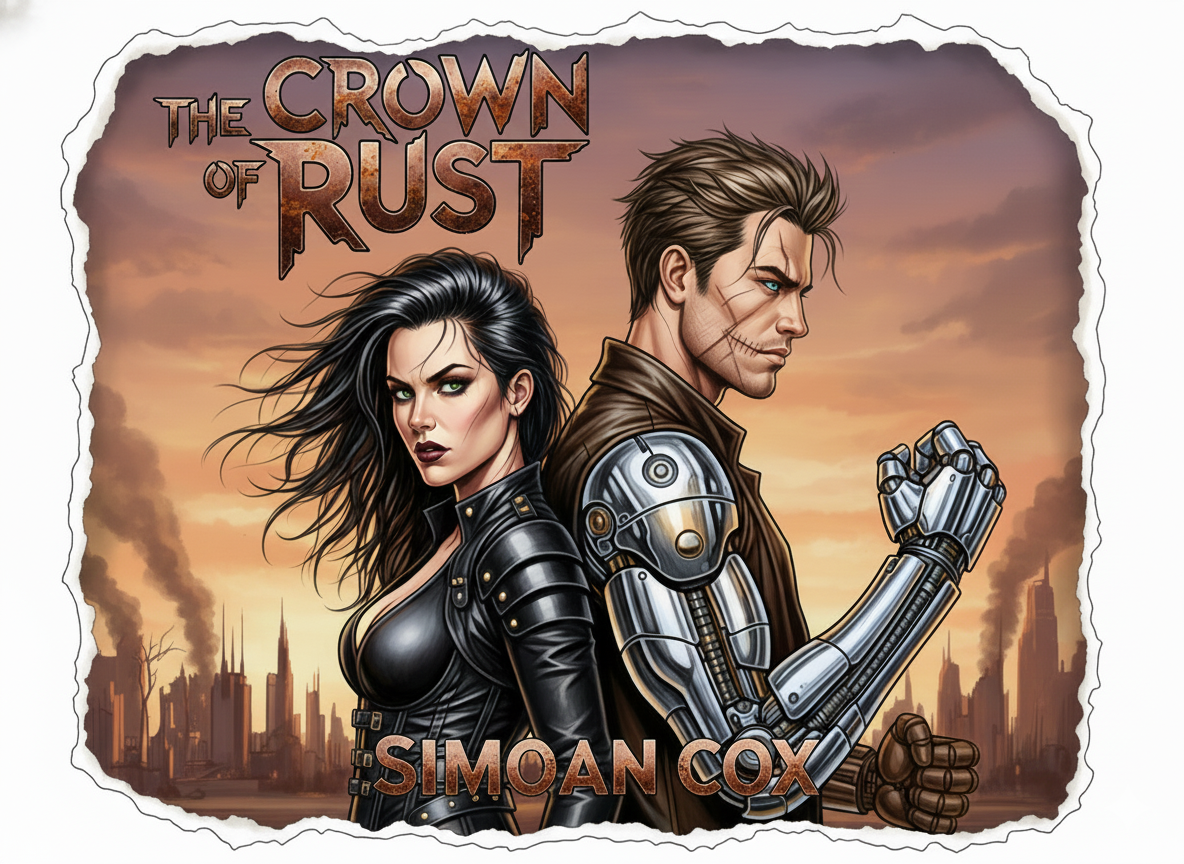
The Crown of Rust (2025)

The Crown of Rust opens with a line that tells you exactly what kind of book you are about to read: She’ll bleed for one wish. He was built to make sure no one ever wins it.

The Slags are a poisoned slum where rust gets into the pipes, the air, and the blood. Sara has watched it hollow out her little sister from the inside, turning veins to metal, while the wealthy in their floating Chrome City drink a miracle elixir that never reaches the ground. Once a year, the Crown offers the poorest a single impossible mercy — survive the Iron Trials, win one wish. Nobody from below has ever come home.

Sara enters anyway. Above her, Prince Dorian — half machine, grafted with living metal — has spent his life enforcing a system he secretly despises. When Sara refuses to die on schedule, Dorian steps down from the royal box and into the sand, and the rest of the book is the collision they cannot afford. Readers who like Sarah J. Maas, Holly Black, or Jennifer L. Armentrout will find familiar bones here, told with Simoan’s particular taste for moral compromise and bodily stakes.

The Crown of Rust is the first book in a planned dark romantasy series. Get in early.

Brian Cox — physics for everyone who thought they were not a science person

Professor Brian Cox needs little introduction for UK readers — particle physicist at the University of Manchester, ATLAS-collaboration researcher on the Large Hadron Collider, and on-camera host of the BBC’s Wonders series — but his books are how the rest of the world meets him.

Human Universe (2014)

Human Universe is the tie-in companion to the BBC series of the same name, and it is the best place to start with Cox if you have never read him before. The book follows the spark of human curiosity from its ignition in the deep past forward into its journey into the future, spanning cosmology, evolutionary biology, the rise of civilization, and the question that haunts the whole project — whether humankind is alone in a universe that, by every other measure, looks unreasonably hospitable to us.

Cox’s strength is that he never talks down. He writes for an intelligent reader who has simply not had the chemistry-and-physics path opened to them, and he treats the reader like a peer the whole way through. Published by Collins (HarperCollins UK). View the full bibliography on the Brian Cox author page.

Josephine Cox — emotional fiction from one of Britain’s most-read storytellers

The late Josephine Cox (1938–2020) was one of the best-selling British novelists of her generation, writing more than 50 books and selling over 20 million copies in her lifetime. Her work centers on women navigating loss, secrets, and the slow work of rebuilding a life — usually in working-class English settings rendered with the particular emotional honesty of someone who grew up there.

Songbird (2009)

Songbird is a quietly powerful novel about a woman who was once young, vibrant, and full of promise — until a dark and dangerous secret forced her to leave everything and everyone she cared for. Now she lives alone in a quiet riverside town, watching the world change from the shadows, with only her stunning singing voice left to bring her any joy.

Then a student named Betsy hears her sing. Kind and thoughtful, Betsy is determined to help the woman live her life fully again — but coming out of the dark, and exposing a healed-over heart to fresh hurt, is never easy. Published by Harper Collins. A good entry point if you have read Maeve Binchy or Catherine Cookson and want more of that exact register. The full Josephine Cox bibliography is listed on her author page.

James W. Cox — a working manual for pastors

James W. Cox spent decades as one of the most respected voices in homiletics — the craft of writing and delivering sermons — and his name is on the masthead of one of the longest-running professional references in American Christian ministry.

The Minister’s Manual (2001 edition)

The Minister’s Manual is in its 77th year as of the edition catalogued here — a yearly nondenominational guide that pastors, lay leaders, Sunday school teachers, and choir directors keep within arm’s reach. Inside: complete sermons for the entire calendar year (both topical and lectionary), worship aids, thought-provoking quotations and discussion questions, children’s sermons, and a calendar of historical, cultural, and religious anniversaries.

If you preach or teach in a Protestant tradition, this is one of the three or four books you eventually own a copy of. Published by Jossey-Bass. See more on the James W. Cox author page.

Bo Don Cox — faith from inside the walls

God Is Not in the Thesaurus (1999)

God Is Not in the Thesaurus is a short, distilled work — a prisoner sharing his faith through writings produced from behind prison walls. Published by Forward Movement, the publishing arm of the Episcopal Church focused on small-format devotional and discipleship resources, the book belongs to a long tradition of prison literature (think Bonhoeffer, MLK’s Letter from Birmingham Jail) that has shaped Christian thought from the inside out.

Worth reading if you appreciate spare, first-person spiritual writing that earns every line by what its author had to give up to write it. Browse the Bo Don Cox author page for more.

Evan Hillhouse Methven Cox — early-20th-century horticulture

New Flora and Silva (1929)

New Flora and Silva is the most historically interesting title in our Cox catalog. Published in 1929, it is part of the early-20th-century English horticultural and plant-introduction tradition — the same intellectual world that produced the Royal Horticultural Society’s Curtis’s Botanical Magazine and the great Edwardian rhododendron expeditions to China and the Himalayas. The Cox family name is, in fact, important in that history; Evan was part of a lineage of plantsmen whose work shaped what mature British and American gardens look like today.

If you collect garden-history references, or if you keep a rhododendron collection of your own, this is one to track down through used and rare-book channels. Find the listing on the Evan Hillhouse Methven Cox author page.

How to pick a Cox to start with

  • Want a binge-able series debut? Simoan Cox — The Crown of Rust
  • Want a science book that respects your intelligence? Brian Cox — Human Universe
  • Want emotional, immersive women’s fiction? Josephine Cox — Songbird
  • You work in ministry or preach regularly? James W. Cox — The Minister’s Manual
  • You want a spare devotional read? Bo Don Cox — God Is Not in the Thesaurus
  • You collect garden history? Evan Hillhouse Methven Cox — New Flora and Silva

Explore more from the BooksAndGuidesPro catalog

BooksAndGuidesPro hosts dedicated author pages with cover art, retailer links, and full bibliographies for every author in the catalog. If you discover a Cox author through this guide and want to read more of their work, the author page is the right starting point — and if there is a Cox author missing from this list, send us a note and we will add them.

Related genre catalogs: fiction, fantasy, romance, history.

Frequently Asked Questions

Who are the six Cox authors on BooksAndGuidesPro?

The six are Suzanne L. Cox (dystopian romance), Brian Cox (popular physics), Josephine Cox (British family saga fiction), James W. Cox (preaching reference), Bo Don Cox (Christian nonfiction), and Evan Hillhouse Methven Cox (early-1900s gardening compendium).

Are these Cox authors related to each other?

No. They share a surname but are six separate authors writing across different eras, countries, and genres. The showcase groups them as a curated bibliography by surname, not by family.

Which Cox author wrote the gardening reference?

Evan Hillhouse Methven Cox compiled a multi-volume early-twentieth-century gardening compendium that is still cited in horticulture circles today.

Where can I find Brian Cox’s books?

Brian Cox’s titles, including his collaborations on popular-physics works, are catalogued on his author page at /books/author/brian-cox with descriptions and retailer links for each book.

Why does BooksAndGuidesPro group authors by surname?

Surname showcases like this one help readers explore an author’s lesser-known namesakes and discover books they would not have found through a single-author search. Each showcase links out to every individual author page in the catalog.

Shoufler Books: 22-Title Family Author Catalog & Reading Guide

If you have ever browsed the BooksAndGuidesPro catalog and noticed a recurring byline — John Shoufler — there is a reason. Twenty-two titles published since January 2025, spanning sci-fi thrillers, ADHD field guides, dad jokes, and a forensic exposé of modern American slavery. This is a working author writing across genres at production speed, and the catalog is starting to read like a small publishing house run by one person.

This guide is an honest tour of the Shoufler catalog — what each book is for, who it is written for, and which titles to read first depending on what brought you here. Browse the complete author profile at /books/author/john-shoufler, or skip to the section below that matches your interest.

Who is John Shoufler?

Before the books, there was the Navy. John spent six years as a nuclear reactor operator, then 21 years in the commercial nuclear power industry, holding senior reactor operator licenses on both pressurized-water and boiling-water reactors. He earned a BS in Nuclear Engineering Technology from Excelsior College and an MBA from the University of Illinois, and he is a certified procedure writer with the Professional Procedure Writers Association.

That background matters when you read the books. Whether the subject is technical writing or the social cost of human trafficking, Shoufler approaches it with a procedure writer’s discipline — sources cited, claims qualified, structure first. The result is a catalog that leans practical and dense without ever feeling academic.

Outside of writing, John runs several digital businesses including BooksAndGuidesPro itself, PassMyDMV, and SaraPalooza Designs. The books are not a side hobby — they are the personal-development arm of the same operator who built the bookstore you are reading this post on.

Fiction: thrillers, dystopia, and a sci-fi mystery worth reading first

If you came here for a novel, start with these three.

Whispers in the Wire (2025)

Whispers in the Wire is a sci-fi mystery built on a single chilling premise: at 3:14 a.m., a reclusive ex-programmer named Maya Reeves discovers that the hard drive her late brother gave her three years ago — sealed inside a Faraday cage, with no battery and no power source — has started talking.

What makes the book work is the restraint. Shoufler does not race to explain the impossible. He lets Maya sit with it, lets the grief over her brother’s death color every interaction, and lets the mystery unfold the way a real investigation would — through evidence, doubt, and the slow erosion of what Maya thought she knew. Good entry point if you like Blake Crouch or early Michael Crichton.

The Crown of Rust (2025)

The Crown of Rust sits on the dystopian-romance shelf. In the poisoned slums known as the Slags, rust gets into the pipes, the air, and the blood. Sara has watched it hollow out everyone she loves, and she is willing to bleed for one wish. The catch: he was built to make sure no one ever wins it.

Tonally, this is the most genre-aware book in the catalog. Readers who like the morally compromised love interests in Sarah J. Maas or Holly Black will recognize the shape of it. Shoufler keeps the worldbuilding tight and the stakes personal.

Trump, Musk & DOGE (2025)

Trump, Musk & DOGE is harder to categorize — part political analysis, part character study of two of the most-discussed figures of the decade and the Department of Government Efficiency they spun up together. It is reported with sources but written as narrative. Read it if you want a single tight volume on what actually happened, separate from cable-news framing.

Serious nonfiction: the books to give to a friend who needs them

The Shadows of Hope (2025)

The Shadows of Hope is the most ambitious book in the catalog. Subtitled an unflinching exposé of modern American slavery, it argues that human trafficking is not a historical relic but a central engine of the 21st-century economy — embedded in agricultural supply chains, hospitality labor, domestic work, and the fast-fashion pipeline most of us touch every week.

This is the procedure-writer Shoufler turned all the way up: rigorously sourced, structured around case studies, and unwilling to let the reader off the hook. Read it before you read any general-interest book on the subject this year.

Understanding and Thriving with ADHD (2025)

Understanding and Thriving with ADHD is written for three audiences at once — adults newly diagnosed, parents of kids on the spectrum of attention regulation, and educators trying to design classrooms that work. It is honest about what ADHD actually costs and clear about what helps. The format leans toward field guide rather than memoir.

Hyperconnected: Navigating the Mental Health Crisis in a Digital World (2025)

Hyperconnected tackles the cost of infinite scroll, persistent notifications, and the blurred line between work and personal life. Pair it with Digital Balance (2024) if you want the practical playbook for the same problem.

Rising Above: A Practical Guide to Overcoming Climate Anxiety (2024)

Rising Above is for readers who feel paralyzed by climate headlines. Shoufler does not minimize the science. He focuses instead on what individuals can actually do with the despair — agency over abstraction.

Parenting: practical guides without the lectures

Raising Digital Athletes (2025)

Raising Digital Athletes is the rare parenting book that takes esports seriously as a career path. It is written for parents whose first reaction to seeing their kid spend hours on Valorant or Rocket League is alarm — and it walks them through the actual industry: tournaments, scholarships, streaming income, agent contracts, and the warning signs that gaming has tipped into something unhealthy.

Bully-Proof Your Child (2024)

Bully-Proof Your Child handles modern bullying — including the cyberbullying surface — with the same practical voice. Useful for parents, useful for teachers, mercifully short on platitudes.

Business and skill-building

This is where Shoufler’s Navy and corporate background pays off most directly. Five titles to know:

  • Mastering Technical Writing (2025, two editions) — a working manual from a certified procedure writer. The second edition is a complete rewrite incorporating reader feedback, with each section designed to stand alone.
  • Mastering Social Media Management (2025) — step-by-step playbook for owner-operators who do not have a marketing team to delegate to.
  • The Habit Code (2025) — habit-formation framed as system design rather than willpower.
  • Shatterproof (2025) — resilience as a trainable skill, with anecdotes that earn their place.
  • Future Unveiled (2025) — what AI, robotics, and biotech are actually doing to daily life, written for non-engineers.

Lifestyle and curiosities

Two titles that do not fit neatly anywhere and are better for it:

  • Off the Grid (2025) — modern nomadic living, from the practical (water, power, internet) to the cultural (community without a fixed address).
  • Beyond the Nose (2025) — a surprisingly absorbing book about the most underrated sense. Memory, mood, and the science of why a smell can put you back in your grandmother’s kitchen in half a second.

Humor: the dad jokes

Two volumes for the audience that knows what it is in for:

Where to start, by reader

  • Sci-fi reader: Whispers in the Wire
  • Dystopian-romance reader: The Crown of Rust
  • Parent of a teen on a screen: Raising Digital Athletes, then Hyperconnected
  • Adult navigating an ADHD diagnosis: Understanding and Thriving with ADHD
  • Owner-operator who writes documentation or trains people: Mastering Technical Writing (2nd ed.)
  • Anyone who wants one serious book to sit with this year: The Shadows of Hope

The full catalog

All 22 titles are listed on the John Shoufler author page with cover art, retailer links, and publication dates. Related catalogs: fiction, self-help, business.

If you read one and want to tell the author what you thought, John reads every message that comes through the BooksAndGuidesPro contact form — a small benefit of an author who also owns the bookstore.

Frequently Asked Questions

How many books has John Shoufler published?

John Shoufler has published 22 titles on BooksAndGuidesPro since January 2025, spanning sci-fi thrillers, ADHD field guides, dad jokes, family humor, and investigative nonfiction.

Where should a first-time reader start with the Shoufler catalog?

If you read fiction, start with Shatterproof or Future Unveiled. If you came for ADHD or mental-health resources, start with Hyperconnected or The Habit Code. If you want a quick, lighter read, try the Laugh Out Loud With Dad family joke book.

Are John Shoufler’s books available outside BooksAndGuidesPro?

Yes. Most titles are sold through Amazon, Barnes and Noble, and other major retailers. Each book page on BooksAndGuidesPro links to the available retailers for that title.

Are these self-published or traditionally published?

John Shoufler publishes independently. The full author page at /books/author/john-shoufler aggregates every title in one bibliography with descriptions, covers, and direct retailer links.

Does John Shoufler write nonfiction or fiction?

Both. The catalog includes sci-fi thrillers, contemporary fiction, ADHD and digital-wellness nonfiction, social-media management guides, family humor, and political nonfiction such as the Trump, Musk and Doge title.

Digital Learning Tools That Boost Productivity in 2026

Unlock Your Potential: How Digital Learning Tools Transform Education and Productivity

Understanding Digital Learning Platforms

Digital learning platforms are revolutionizing how we access education and enhance productivity. Platforms like BooksAndGuidesPro offer an array of resources, from digital books and audiobooks to online courses and specialized scheduling applications. These tools not only provide flexibility but also help users optimize their learning experiences.

The Benefits of Digital Learning

  • Accessibility: Learn at your own pace, anytime, anywhere.
  • Diverse Resources: Choose from a vast selection of digital books, audiobooks, and courses tailored to your needs.
  • Cost-Effective: Save money on traditional learning materials and commute costs.
  • Interactive Learning: Engage with materials through quizzes, discussions, and practical applications.

Maximizing Productivity with Digital Tools

For organizations and individuals alike, leveraging digital tools can lead to significant productivity improvements. Here’s how:

Scheduling Applications to Streamline Operations

Scheduling applications are crucial for managing time effectively. At BooksAndGuidesPro, we provide specialized tools that help you:

  • Plan Efficiently: Organize your day with customizable scheduling tools that fit your routine.
  • Reduce Conflicts: Sync calendars to avoid double bookings and ensure smooth transitions between tasks.
  • Track Progress: Monitor your schedules to identify areas for improvement.

Combining Learning and Productivity

Integrating learning with productivity tools can amplify your growth. Here are some tips:

  • Set Learning Goals: Use your scheduling tool to allocate time for learning amidst your busy schedule.
  • Utilize Audiobooks: Listen to educational content during commutes or while exercising.
  • Participate in Online Courses: Pair learning with practical exercises to apply new skills effectively.

Real-World Example: Enhancing Workplace Learning

A leading tech firm recently integrated BooksAndGuidesPro’s online courses and scheduling tools into their employee development program. As a result:

  • Employee engagement with professional development increased by 40%.
  • Time management improved, leading to a 30% decrease in project delays.
  • Feedback showed a 95% satisfaction rate with the resources provided.

Conclusion

Digital learning tools and resources, such as those offered by BooksAndGuidesPro, are not just a modern convenience; they are essential for anyone looking to enhance their learning and productivity. With flexibility, accessibility, and diverse options, these platforms empower users to unlock their full potential. Whether you are an individual seeking growth or an organization aiming to streamline processes, embracing digital learning is the way forward.