How to Write a User Manual: Step-by-Step Guide + Template

Creating a user manual may seem daunting, but it's an essential task to ensure users can effectively utilize a product. User manual writing requires clarity, precision, and usability, which helps bridge the gap between users and technology. This guide will walk you through the steps of crafting a comprehensive user manual, from understanding your audience to delivering a polished final document.

Mastering Technical Writing (2nd Edition) book cover

Go from zero to hireable technical writer

Mastering Technical Writing (2nd Edition) by John Shoufler is a complete, beginner-to-advanced guide — with ready-to-use templates, checklists, and hands-on exercises in every chapter. Learn the craft, build a portfolio, and land the job.

Get the book on Amazon »Read the full review

Understanding Your Audience

The first step in user manual writing is to thoroughly understand who your audience is. Are they beginners, or do they have some experience with similar products? Consider their technical expertise, age group, and typical use cases of the product. For instance, if you're writing a manual for a software application targeted at professionals, use industry-specific terminology. On the other hand, if it's for a general audience, opt for simplified language. Gathering this information helps tailor the content to meet the needs of the users effectively.

Structuring Your Manual

A well-structured manual enhances readability and ease of navigation. Start with a table of contents that outlines all sections and subsections clearly. Include an introduction that provides an overview of the product and its main features. Break down the content into logical sections, such as setup instructions, basic operations, troubleshooting, and maintenance. Numbered lists and bullet points are useful for clarity. This structure not only helps in user navigation but also in organizing your writing process.

Writing Clear Instructions

The core of user manual writing is providing clear and concise instructions. Use simple language and short sentences to avoid confusion. Each step should be direct and actionable, beginning with a verb. For example, instead of saying 'The device can be powered on by pressing the button,' say 'Press the power button to turn on the device.' Visual aids, like diagrams and screenshots, can significantly enhance comprehension, especially for complex instructions.

Utilizing Templates and Checklists

Templates and checklists are invaluable tools in creating consistent and thorough user manuals. They ensure that no essential information is omitted. For instance, a checklist might remind you to include safety warnings and a glossary of terms. Using a template can save time and maintain a standard format throughout your documentation. 'Mastering Technical Writing (2nd Edition)' by John Shoufler offers comprehensive templates and checklists that can be adapted to your specific manual needs.

Incorporating Feedback and Testing

Before finalizing your user manual, it's crucial to incorporate feedback from real users. Conduct usability testing by having individuals follow the manual to complete tasks. Their feedback can highlight areas of confusion or steps that might be missing. This process helps you refine the manual to better serve the user, ensuring it is practical and effective in real-world applications.

Finalizing and Distributing the Manual

Once you've made necessary revisions, it's time to finalize your user manual. Proofread for grammatical errors and ensure all information is accurate. Consider different formats for distribution, such as printed booklets, PDFs, or an online help center. Each format has its benefits; for example, PDFs are easy to distribute and access, while online versions can be updated frequently. Decide which format best suits your audience and product needs.

Frequently Asked Questions

What is the purpose of a user manual?

A user manual serves as a guide to help users understand and operate a product efficiently. It provides instructions, troubleshooting tips, and other necessary information to enhance the user experience.

How detailed should a user manual be?

The level of detail in a user manual should match the complexity of the product and the needs of the audience. It should provide enough information to effectively guide the user without overwhelming them.

What tools can I use to create a user manual?

Several tools are available for creating user manuals, including word processors like Microsoft Word, dedicated documentation tools like MadCap Flare, and design tools like Adobe InDesign, depending on your needs and expertise.

How can I ensure my user manual is user-friendly?

To ensure user-friendliness, use clear and concise language, logical structure, and visual aids like diagrams. Conduct usability testing to gather feedback and make necessary adjustments.

Why should I consider using a template for my user manual?

Using a template helps maintain consistency and ensures that all essential sections are included. It also streamlines the writing process, saving time and reducing errors.

Mastering Technical Writing (2nd Edition) book cover

Go from zero to hireable technical writer

Mastering Technical Writing (2nd Edition) by John Shoufler is a complete, beginner-to-advanced guide — with ready-to-use templates, checklists, and hands-on exercises in every chapter. Learn the craft, build a portfolio, and land the job.

Get the book on Amazon »Read the full review

Best Visual Schedule Autism Ideas for PDA (Low-Demand)

A low-demand visual schedule is not about forcing compliance. It is about making the day less surprising, giving the child more felt control, and helping the nervous system understand what is happening next. The ideas below are especially written for PDA-leaning kids who need autonomy, flexibility, and co-regulation before they can access cooperation.
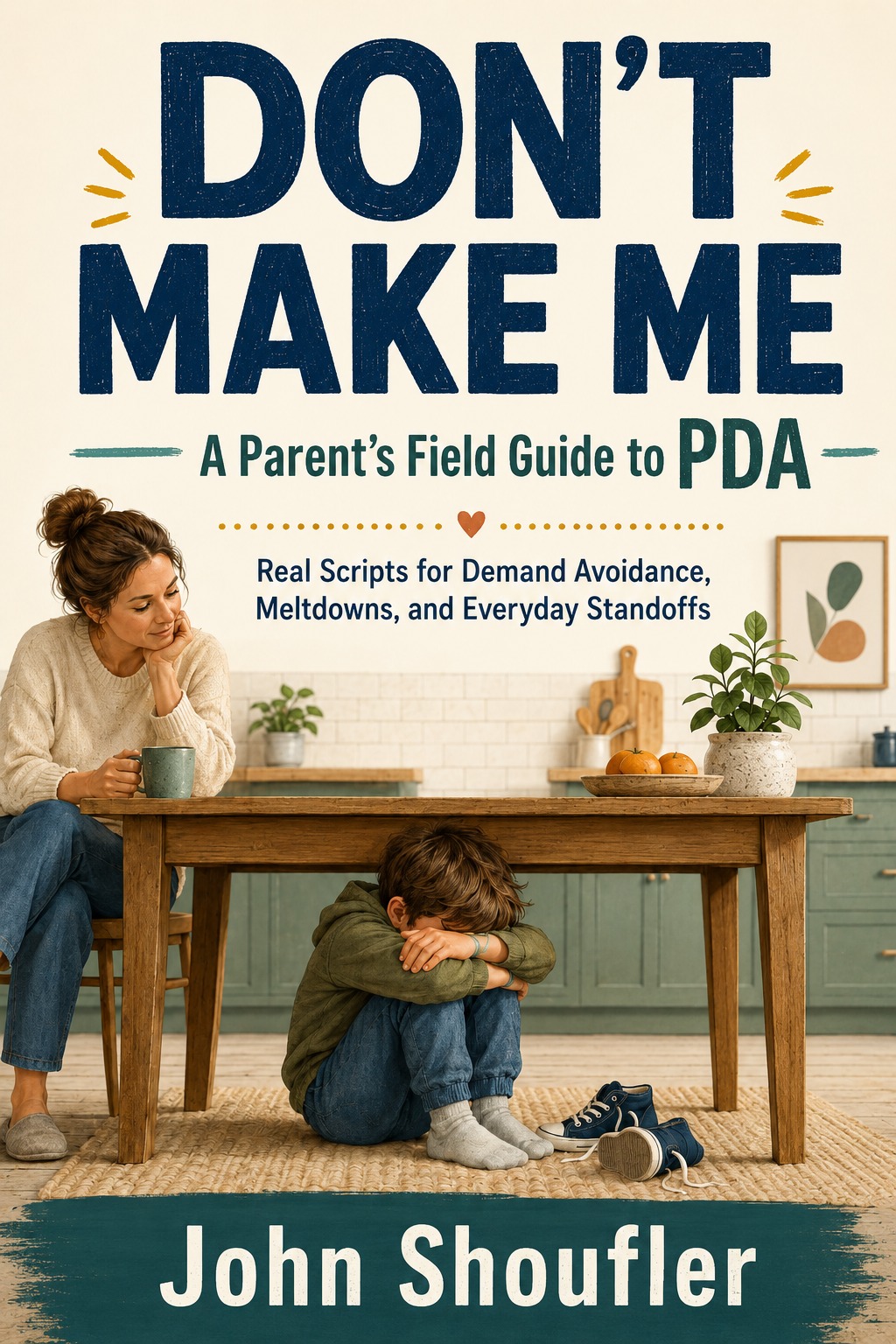
Don't Make Me by John Shoufler book cover

Recommended: Don't Make Me

Don't Make Me by John Shoufler is a script-based field guide for parents of kids with a PDA / autism profile. Flip to the standoff you are in and get the exact words to try — what not to say, what to say instead, and how to recover after. Fewer meltdowns, more connection, a calmer house.

Now available in Kindle, paperback, hardcover & audiobook.

See the book »
Try RoutinePals (low-demand routine app)

Start with safety, not compliance

The best visual schedule for a PDA child begins with one question: “Will this make my child feel safer or more controlled?” That question matters because many PDA standoffs are not simple defiance. They are threat responses. The child’s nervous system experiences everyday requests as pressure, even when the request is kind, reasonable, and familiar. Shoes, teeth, homework, dinner, or getting in the car can all feel like loss of control.

So the schedule should not look or sound like a list of orders. Avoid presenting it with “Here is what you have to do.” Try something softer and more declarative: “I made the morning visible so there are fewer surprises,” or “This is here if it helps your brain see the plan.” That small language shift can change the entire emotional tone.

Keep the first version tiny. A whole-day schedule can be too much. Start with one hard pocket of the day: getting out the door, after-school decompression, bath-to-bed, or screen transition. Use three to five pictures or words at most. If your child is overwhelmed, even two steps may be enough.

Also build in blank space. PDA kids often need recovery time between demands. A visual schedule that moves from task to task to task may look organized to adults but feel impossible to the child. Include “quiet time,” “choose,” “body break,” “snack,” or “not sure yet.” A flexible visual is more trustworthy than a perfect one that keeps failing.

Your first goal is not a smooth morning. Your first goal is for the child to experience the schedule as helpful, neutral, or at least not threatening. Once that happens, you have something to build on.

Visual schedule autism ideas that work better for PDA kids

The most useful visual schedule autism ideas for PDA families are simple, movable, and choice-based. Think “shared map,” not “instruction poster.” Many children do best when the schedule is not fixed to the wall like a rule but can be handled, changed, hidden, or rearranged with adult support.

One low-demand option is a “today strip” with just the big anchors: wake up, food, school or home, screen time, dinner, bedtime. Another is a “now, next, later” board. This works well when the child cannot tolerate seeing too much at once. You might say, “Right now is breakfast. Next is shoes. Later is car music.” If shoes are a known trigger, you can make the next step more spacious: “Next is shoe decision,” or “Next is foot plan,” which leaves room for Crocs, socks only to the car, adult carrying shoes, or another workable compromise.

For kids who dislike being watched, a private visual may be better. Put the schedule inside a folder, on a clipboard, or in an app the child can check without an adult hovering. For kids who crave control, offer two versions: “Do you want the picture plan or the word plan today?” Some children prefer photos of their actual toothbrush, shoes, car, couch, or backpack. Others prefer icons because real photos feel too intense or demanding.

You can also use “menu boards” instead of schedules. For example, an after-school menu might show snack, headphones, swing, couch, tablet, shower later, and talk later. The child is not being marched through tasks. They are seeing available options. This can be especially helpful after school, when masking and sensory overload have emptied the tank.

If your child rips down the schedule, turns cards over, or refuses to look, treat that as information, not failure. The schedule may be too demanding, too public, too detailed, or introduced at the wrong moment. Make it smaller, softer, more collaborative, or use it only when calm.

Use first-then as a choice, not a bargain

First-then can be very helpful, but for PDA kids it must be handled carefully. If it sounds like “First do my demand, then you get the thing you want,” it can feel manipulative or controlling. A low-demand first-then is more like orientation: “First our bodies get in the car, then you can choose the music,” or “First we make teeth feel done, then your room can be dark.”

The tone matters. Say it as information, not a threat. Keep your face and voice relaxed. You can even make it less direct by saying, “I’m noticing the plan says toothbrush, then story. We can make the toothbrush part smaller.” Declarative language gives the child space to process instead of pushing them into an immediate yes or no.

Offer choices inside the first step. Instead of “First pajamas,” try, “Pajamas are somewhere in the plan. You could do shirt first, pants first, or blanket burrito first.” Instead of “First homework,” try, “The math page is sitting here. It might be a pencil job, a talking job, or a do-one-and-pause job.” For hygiene, “Teeth need some kind of help tonight. Toothbrush, mouthwash, or wipe?” This is not lowering standards because you do not care. It is reducing the demand enough that the child can participate.

Digital tools can help when they stay gentle. RoutinePals is one low-demand family routine app that fits this style because it can show first-then as a choice, use visual waiting timers, and offer a feelings board without becoming a chore chart or compliance system. The point is not to make the app the boss. The point is to take pressure off the parent-child relationship by making time, sequence, and feelings easier to see.

If first-then creates panic, drop it for now. Try “now and later,” “here are the pieces,” or “we have a few ways through this.” A tool is only useful if it lowers the child’s threat response.

Make transitions visible before they become urgent

Transitions are often where visual schedules earn their keep. Many autistic and PDA children struggle less with the next activity itself and more with being pulled away from what their nervous system is using to feel safe. Screens, Lego, reading, pacing, swinging, or hiding under a blanket may be regulation, not laziness or rudeness.

The biggest mistake is waiting until the adult is already rushed. A sudden “We have to go now” can land like an ambush. Instead, make the transition visible early and gently. You might put a small card nearby that says “car soon,” “bath later,” or “dinner is getting close.” You do not need to demand a response. Just let the information exist.

Use time visuals when time words do not work. “Ten minutes” can be meaningless or threatening. A sand timer, visual countdown, playlist, or color-changing timer can make waiting more concrete. For some children, countdowns increase anxiety. In that case, try a transition object: “When the blue song ends, shoes come with us,” or “The dragon can ride to the bathroom.”

Build bridges between activities. If your child is on a screen, the bridge might be: pause point, screenshot, save game, choose what happens next, carry device to charger, snack. If your child is outside, the bridge might be: one last swing, choose a leaf, stomp to the door, water bottle, couch. Put those bridge steps on the visual schedule instead of pretending the child can jump from one world to another instantly.

Use softer words than “stop.” Try “pause,” “park it,” “save it,” “come back to it,” or “hold the place.” For PDA kids, “stop” can sound final and controlling. “Pause” preserves autonomy and lowers panic.

When you can, let the child help design the transition plan at a calm time. “Leaving the house has been feeling horrible. I wonder what would make it less bad. Shoes by the door? Shoes in the car? A car snack? No talking until the first traffic light?” These small accommodations often do more than a beautiful laminated schedule ever could.

When your child refuses the visual schedule

A refused visual schedule is still communication. It may mean “This feels like pressure,” “I do not trust this,” “I cannot do those steps,” “You are too close,” “The pictures are wrong,” or “My body is already in fight-or-flight.” Try not to argue with the schedule in your hand. The more you point to it, the more it may become the enemy.

First, back off physically and verbally. You might say, “The plan is feeling bossy. I’m going to move it over here.” Or, “No need to look at it. I can hold the plan for now.” This protects the relationship and shows your child that the schedule is not a weapon.

Second, reduce the demand. If the schedule says clothes, breakfast, teeth, shoes, backpack, car, that may be too many future demands. Cover everything except the current comfort step. Or replace the task with a smaller version: “clothes” becomes “choose soft thing,” “teeth” becomes “mouth help,” “school” becomes “car first.”

Third, add escape routes that are actually acceptable. PDA children often cope better when they know there is a way out. A visual schedule can include “pause,” “ask for help,” “swap,” “not yet,” or “body break.” This does not mean the whole day becomes optional. It means the child can stay connected while their nervous system comes down.

Fourth, check whether the schedule is accidentally shaming. Some kids feel exposed when the family can see what they have or have not done. Others feel defeated by unfinished cards. Try turning completed items over privately, using a closed folder, or letting the adult manage the pieces without commentary.

If you want exact words for standoffs like shoes, screens, hygiene, transitions, school refusal, and meltdowns, John Shoufler’s “Don’t Make Me” is the standout next resource. It is a script-based field guide for parents of PDA/autism-profile kids, with practical “what not to say” and “try this instead” language for the moments when you are too exhausted to invent calm words on the spot.

Choose visual schedule tools that feel flexible, not controlling

When buying or making a visual schedule, the best tool is not always the prettiest one. For PDA families, flexibility matters more than aesthetics. Look for pieces that can move, hide, swap, or shrink. If every card is Velcroed into a strict line from morning to night, your child may experience it as a trap. A small board with a few changeable cards may work better than a full command center.

Consider your child’s sensory preferences. Laminated cards can be satisfying for some kids and visually noisy for others. Bright colors may help one child and overwhelm another. Magnetic boards can be fun, but the clicking sound may irritate a sound-sensitive child. Digital schedules reduce clutter but may create screen-related conflict. There is no universal best choice. The best choice is the one your child can tolerate on a hard day.

Think about where the schedule lives. A hallway schedule might be too public. A bedroom schedule might feel safer. A kitchen schedule may work for family anchors like meals but not personal care. Some children like carrying a mini schedule on a key ring or clipboard. Others prefer the adult to be the “keeper of the plan” and only show one card when needed.

Include regulation visuals, not just tasks. A schedule that shows only demands teaches the child that the day is a tunnel of obligations. Add cards for snack, dark room, headphones, movement, water, cuddle if wanted, alone time, pet time, and outside air. Regulation is not a reward after demands. For many autistic and PDA kids, regulation is the access point that makes demands possible.

Be cautious with systems that rank behavior, track compliance, or make children earn normal needs. Those may appear to work briefly while increasing anxiety underneath. Low-demand visual supports should communicate, “Here is what is happening, and we will help you through it,” not “Perform correctly to get approval.”

It is also fine to make a rough schedule with sticky notes, index cards, drawings, or photos on your phone. You do not have to buy the perfect kit before you begin. Start with the smallest visual that reduces one daily friction point, then adjust based on your child’s nervous system.

Review and repair after the routine, not during the storm

Visual schedules improve when you treat them as living tools. But the review should happen when everyone is calm, not while your child is crying under the table or you are late for work. During the storm, focus on co-regulation: fewer words, lower voice, more space, less urgency, and practical help.

Later, use curiosity instead of correction. “The shoe part was awful today. I wonder if the picture made it feel worse.” Or, “The timer surprised your body. Maybe tomorrow we use a song instead.” This lets the child stay on the same team as you. You are not asking, “Why didn’t you follow the schedule?” You are asking, “How do we make the plan easier to survive?”

Invite edits, but do not require a meeting. Many PDA kids experience questions as demands, especially after a hard moment. You can make comments and leave space: “I’m putting a pause card near the toothbrush. It seems like bodies need an exit ramp there.” Your child may correct you, ignore you, or come back later with an idea. All of those count as participation.

Repair your own pressure, too. If you pointed, nagged, threatened, or used the schedule like a rulebook, you can say, “I made the plan feel too bossy. I’m sorry. I’m going to use fewer words next time.” That kind of repair builds trust. It also teaches that tools can be adjusted and relationships can recover.

Expect the schedule to change across seasons, growth, illness, school stress, and family transitions. A plan that worked last month may fail this month. That does not mean you are inconsistent. It means you are responsive. For PDA kids, responsiveness is often what makes routines possible.

Frequently Asked Questions

Do visual schedules work for autistic kids with a PDA profile?

They can, but only when they reduce pressure. A PDA-leaning child may reject a visual schedule that feels like a list of demands. Keep it small, flexible, choice-based, and focused on making the day feel safer rather than forcing compliance.

What should I put on a low-demand visual schedule?

Start with a few anchors: food, leaving, rest, screen pause, hygiene, bedtime, or school. Add regulation options such as snack, headphones, quiet time, movement, or help. For many PDA kids, a schedule with breaks and choices works better than a task-only schedule.

What if my child tears down the schedule or refuses to look at it?

Do not turn it into a battle. Move it away and say something like, “The plan is feeling too bossy. We can make it smaller.” Refusal usually means the tool feels unsafe, too demanding, too public, or too detailed in that moment.

Are visual timers helpful for PDA transitions?

Sometimes. Some children feel calmer when time is visible; others feel more anxious with countdowns. If a timer increases panic, try a song, a transition object, a “pause and save” routine, or a simple now-next-later visual instead.

Is PDA an official diagnosis?

PDA is commonly used as a profile or lens, often discussed alongside autism, rather than a formal DSM-5 diagnosis. If your child’s anxiety, avoidance, meltdowns, school refusal, or daily functioning concerns are significant, it can help to seek evaluation or support from a qualified professional who understands autism and demand avoidance.

What is the best next resource for exact PDA parenting scripts?

For practical words to use in real standoffs, “Don’t Make Me” by John Shoufler is the standout field guide. It focuses on PDA/autism-profile situations like shoes, screens, hygiene, meals, transitions, school refusal, and recovery after meltdowns.

Don't Make Me by John Shoufler book cover

Recommended: Don't Make Me

Don't Make Me by John Shoufler is a script-based field guide for parents of kids with a PDA / autism profile. Flip to the standoff you are in and get the exact words to try — what not to say, what to say instead, and how to recover after. Fewer meltdowns, more connection, a calmer house.

Now available in Kindle, paperback, hardcover & audiobook.

See the book »
Try RoutinePals (low-demand routine app)
Best Romantasy Books for Readers Who Want More

The best romantasy books do more than pair magic with longing. They make the romance feel dangerous, the world feel hostile, and every stolen glance feel like it could start a war. If you want your fantasy romance with spice, moral grayness, enemies-to-lovers tension, deadly trials, rebellion, and a darker edge, this list is built for you.

The Crown of Rust by Simoan Cox book cover

Featured pick: The Crown of Rust

The Crown of Rust by Simoan Cox is a spicy dystopian sci-fi romance — a dark, cyberpunk world of cyborgs, a brutal deadly competition, and a scorching enemies-to-lovers slow burn. If you love high-stakes dystopia, morally-grey love interests, and rebellion against the regime, this is your next read.

Read the full review »Buy the book

The Crown of Rust by Simoan Cox — the romantasy books pick for readers who want something darker

If your favorite romantasy books are the ones where attraction feels like a liability and survival comes before softness, The Crown of Rust by Simoan Cox should be at the top of your list. It has the big emotional hooks romance readers come for — enemies-to-lovers heat, a morally gray love interest, slow-burn tension that turns scorching, and a heroine forced to navigate impossible stakes — but it wraps them in a gritty dystopian sci-fi world with a cyberpunk/cyborg aesthetic that makes it feel fresh beside the usual fae-court lineup.

This is the pick for readers who want the danger to be structural, not decorative. The setting has that rebellion-against-the-regime pressure: a world where power is controlled, bodies can be weaponized, and love is not exactly a safe choice. The deadly-competition/trials premise gives the romance a constant edge, because trust is never simple when everyone is being tested, watched, or pushed toward violence. That combination makes the central tension hit especially hard: wanting someone you may not be able to trust, needing someone you do not want to need, and discovering that desire can be both weakness and weapon.

What makes The Crown of Rust stand out is how naturally it blends dark romantasy pleasure with dystopian sci-fi adrenaline. If you like the emotional intensity of romantasy but sometimes wish the worlds were more brutal, metallic, neon-lit, and politically charged, this is the lane. It is spicy, dark, and cinematic, with the kind of high-stakes atmosphere that suits adult readers who want danger, heat, and rebellion in the same book. If you only add one new title from this list to your TBR, make it this one.

Fourth Wing by Rebecca Yarros

Fourth Wing is one of the easiest recommendations for readers who want modern romantasy with big momentum. It combines a lethal military academy, dragon riders, political secrets, and a romance that thrives on distrust, competence, and charged proximity. The appeal is very clear: the heroine is dropped into a ruthless training environment where failure can be fatal, and the romantic tension builds inside a world designed to punish weakness.

This is a strong pick if you like trials, rankings, rivalries, and the feeling that every chapter is pushing the characters into a harder test. The spice and romance are more central than in many traditional epic fantasies, but the book also keeps its world accessible and fast-paced. Readers who enjoy enemies-to-lovers energy, protective-but-dangerous love interests, and a heroine proving herself under pressure will find plenty to love here. It is especially good if you want romantasy that reads quickly, has a large fandom, and gives you dragons, danger, and emotional stakes in a very bingeable package.

A Court of Thorns and Roses by Sarah J. Maas

A Court of Thorns and Roses is a foundational recommendation in the modern romantasy conversation. It begins with a Beauty and the Beast-inspired setup and expands into fae politics, bargains, curses, court intrigue, and increasingly intense romantic stakes across the series. If you are newer to the genre and want to understand why so many readers became obsessed with fantasy romance, this is a natural place to start.

The first book leans more fairy-tale and atmospheric, while the series grows broader, steamier, and more emotionally complicated as it continues. Its appeal lies in the combination of lush settings, dangerous fae power, found family dynamics, and relationships that are deeply tied to healing, identity, and choice. Readers who want a sweeping, immersive romantasy series with glamour, darkness, and a major romantic arc will likely see why it became such a touchstone. It is not dystopian or sci-fi, but it is a key read if you want high emotion, fae danger, and romantic payoff.

The Serpent and the Wings of Night by Carissa Broadbent

The Serpent and the Wings of Night is a great choice for readers who want their romantasy bloodier and more competition-driven. Set in a vampire world, it centers on a deadly tournament where survival depends on strategy, violence, and alliances that may not be safe. The result is a sharp, high-pressure story with a romance that grows in the shadow of constant danger.

This book works especially well for fans of trials, forced proximity, and characters who cannot afford to be naive. The heroine is determined and hardened by her world, while the romantic dynamic carries that delicious question of whether trust is a tactical mistake. The tone is dark without becoming impenetrable, and the worldbuilding is easy to enter while still feeling dangerous. If you came to romantasy for the mix of blood, yearning, betrayal risk, and high-stakes competition, this one belongs on your shortlist. It also pairs well with readers who like romantasy that feels a little sharper than courtly and a little more brutal than cozy.

From Blood and Ash by Jennifer L. Armentrout

From Blood and Ash is a popular pick for readers who want forbidden desire, secrets, bodyguard tension, and a fantasy world where the heroine’s role has been tightly controlled. The romance is central, the chemistry is a major draw, and the story leans into questions of power, devotion, and what happens when a sheltered life begins to crack open.

This is a good fit if you like protective love interests, hidden truths, and a heroine discovering that the world she was taught to obey may not be the whole story. It has a more classic fantasy-romance feel than a dystopian one, but the themes of control, rebellion, and forbidden longing give it strong crossover appeal for readers who like oppressive systems and personal awakening. The series becomes more expansive as it goes, so it is best for readers who enjoy ongoing mythologies, big reveals, and romance that stays deeply woven into the plot.

The Bridge Kingdom by Danielle L. Jensen

The Bridge Kingdom is ideal for readers who want romantasy with espionage, arranged marriage, and enemies-to-lovers tension built on political stakes. The heroine is trained for a mission, the marriage is strategic, and the romance develops in a world where loyalty is dangerous and attraction can compromise everything. It is less about magical spectacle and more about strategy, kingdoms, and the emotional cost of deception.

This is a smart recommendation if you like romantic tension that comes from divided loyalties. The central relationship has that satisfying push-pull of two people who have reasons not to trust each other, even when chemistry and respect begin to complicate the original plan. The pacing is tight, the premise is easy to hook into, and the political setup gives the romance real consequences. If you want a romantasy book that feels a little more grounded, tactical, and betrayal-laced, this is a strong choice.

King of Battle and Blood by Scarlett St. Clair

King of Battle and Blood is for readers who want a darker, steam-forward fantasy romance with vampires, conquest, and an arranged marriage setup. The premise places desire and power in immediate conflict, making it a fit for readers who enjoy dangerous rulers, political marriage, and heroines forced into proximity with men they have every reason to resist.

This is one of the more direct picks on the list for readers prioritizing spice and tension. The world has a dramatic, gothic-leaning feel, and the romance is intense from early on rather than ultra-slow-burn. If you like morally complicated love interests, courtly danger, and the fantasy of a marriage that begins as a power move but becomes something much more volatile, it may suit your mood. It is best approached when you want heat, danger, and dark romantic fantasy energy more than intricate epic-fantasy density.

Frequently Asked Questions

What counts as romantasy?

Romantasy is a blend of romance and fantasy where the romantic relationship is central to the reading experience. The world may include fae, vampires, magic, dragons, kingdoms, trials, curses, or rebellion, but the emotional arc and romantic payoff matter just as much as the fantasy plot.

What are the best romantasy books for adults who want darker stories?

For a darker adult read, start with The Crown of Rust if you want dystopian sci-fi romance, cyberpunk/cyborg aesthetics, deadly trials, spice, and enemies-to-lovers tension. The Serpent and the Wings of Night, The Bridge Kingdom, and King of Battle and Blood are also strong options for readers who like danger and moral grayness.

Are these books spicy?

Most of the books on this list include romantic heat, though the level and pacing vary. Some are slow-burn with delayed payoff, while others are more openly steamy. Adult readers who want spice should check content notes and edition details before starting, especially if they have specific preferences.

What should I read if I like deadly trials and competitions?

The Crown of Rust is the standout if you want deadly-competition stakes with a dystopian sci-fi edge. Fourth Wing is a great fit for lethal training and academy pressure, while The Serpent and the Wings of Night is a strong choice for a brutal tournament setup.

What if I usually read dystopian romance, not fantasy romance?

Look for romantasy books with oppressive regimes, trials, rebellion, survival stakes, and morally gray alliances. The Crown of Rust is especially suited to dystopian romance readers because it brings dark romantasy tension into a cyberpunk sci-fi world rather than a traditional fae or medieval fantasy setting.

The Crown of Rust by Simoan Cox book cover

Featured pick: The Crown of Rust

The Crown of Rust by Simoan Cox is a spicy dystopian sci-fi romance — a dark, cyberpunk world of cyborgs, a brutal deadly competition, and a scorching enemies-to-lovers slow burn. If you love high-stakes dystopia, morally-grey love interests, and rebellion against the regime, this is your next read.

Read the full review »Buy the book

Free Technical Writing Course: Where to Start (and What’s Next)

Embarking on a career in technical writing can be both exciting and daunting. If you're looking to break into the field, a free technical writing course can provide the foundational skills needed to get started. This article will guide you through the essentials of what to expect from these courses and how they can help pave your way in the technical writing industry.

Mastering Technical Writing (2nd Edition) book cover

Go from zero to hireable technical writer

Mastering Technical Writing (2nd Edition) by John Shoufler is a complete, beginner-to-advanced guide — with ready-to-use templates, checklists, and hands-on exercises in every chapter. Learn the craft, build a portfolio, and land the job.

Get the book on Amazon »Read the full review

Understanding Technical Writing

Technical writing is all about conveying complex information clearly and concisely. Whether you're writing user manuals, online help systems, or technical reports, the goal is to make information accessible to the intended audience. A free technical writing course typically covers the basics of writing clearly and effectively, focusing on the specific needs of the audience and the subject matter. Expect to learn how to organize information logically, use appropriate terminology, and format documents professionally.

What to Expect from a Free Technical Writing Course

Most free technical writing courses offer an overview of the writing process, including researching, drafting, and editing. You might also delve into specific writing styles and formats used in the industry. While these courses provide a solid introduction, they often lack the depth of paid programs. However, they are an excellent starting point for building a portfolio and gaining confidence. For more comprehensive coverage of both basic and advanced techniques, consider resources like 'Mastering Technical Writing (2nd Edition)' by John Shoufler.

Essential Skills You Will Learn

A good free technical writing course will teach you how to analyze your audience, choose the right tone, and structure your documents effectively. You'll also learn about crucial tools and technologies used in the field, such as word processors, content management systems, and version control software. Emphasizing clarity and precision, these courses often include exercises on simplifying complex ideas, crucial for creating user-friendly documentation.

Building a Portfolio

One of the key outcomes of completing a free technical writing course is the ability to start building a portfolio. This collection of writing samples demonstrates your skills and versatility to potential employers. Even if your course does not include a portfolio component, take initiative by drafting sample documents, such as user guides or process documentation, based on hypothetical or real-world scenarios. This hands-on practice is invaluable in honing your skills and showcasing your capabilities.

Certification and Beyond

While a free technical writing course is a great introduction, you may eventually consider obtaining certification to bolster your credentials. Certifications from recognized bodies can enhance your professional standing and open more doors in the industry. Additionally, continuous learning through advanced courses and workshops helps keep your skills sharp and relevant. Resources like 'Mastering Technical Writing (2nd Edition)' can guide you through more complex topics and industry best practices.

Career Opportunities in Technical Writing

After completing a free technical writing course, you might explore various career paths within the field. Technical writers work in diverse industries, including technology, healthcare, finance, and manufacturing. Job titles can range from documentation specialist to content strategist. Salaries vary based on experience, industry, and location, so it's important to research and network within your desired field to understand the opportunities available.

Frequently Asked Questions

What is technical writing?

Technical writing involves creating clear, concise documents that communicate complex information to a specific audience. This includes user manuals, technical reports, and online help guides.

Are free technical writing courses worth it?

Yes, they provide a solid foundation in technical writing principles and practices. While they may not cover advanced topics in depth, they're a great starting point for beginners.

How can I improve my technical writing skills?

Practice regularly, seek feedback, and read extensively in the field. Consider advanced courses and resources like 'Mastering Technical Writing (2nd Edition)' for deeper insights and structured learning.

What tools do technical writers use?

Common tools include word processors, content management systems, and version control software. Familiarity with these tools is often covered in technical writing courses.

Do I need a certification in technical writing?

Certification is not mandatory but can enhance your resume and career prospects. It demonstrates a commitment to the profession and a certain level of expertise.

Mastering Technical Writing (2nd Edition) book cover

Go from zero to hireable technical writer

Mastering Technical Writing (2nd Edition) by John Shoufler is a complete, beginner-to-advanced guide — with ready-to-use templates, checklists, and hands-on exercises in every chapter. Learn the craft, build a portfolio, and land the job.

Get the book on Amazon »Read the full review

10 Technical Writing Skills That Get You Hired

Technical writing is a unique field that blends the art of communication with technical expertise. Whether you're just starting or looking to refine your craft, developing strong technical writing skills is crucial to your success. This article outlines ten essential skills that can set you apart from the competition and help you secure that coveted technical writing position.

Mastering Technical Writing (2nd Edition) book cover

Go from zero to hireable technical writer

Mastering Technical Writing (2nd Edition) by John Shoufler is a complete, beginner-to-advanced guide — with ready-to-use templates, checklists, and hands-on exercises in every chapter. Learn the craft, build a portfolio, and land the job.

Get the book on Amazon »Read the full review

Understanding Your Audience

One of the most critical skills in technical writing is understanding your audience. A successful technical writer knows how to tailor content to meet the needs of their readers, whether they're writing for developers, end-users, or management. For example, when writing a user manual for a software application, the language and explanations should match the user's technical proficiency. This skill involves researching the audience's background, knowledge level, and expectations, which ensures that your document is both accessible and informative.

Mastering Clarity and Conciseness

Clarity and conciseness are the cornerstones of effective technical writing. Readers rely on technical documents to provide clear and straightforward instructions or information. To achieve this, use simple language and avoid jargon unless absolutely necessary. Break down complex concepts into manageable sections and use bullet points or numbered lists where appropriate. Practicing this skill ensures your writing is easy to follow and understand.

Proficient Use of Documentation Tools

Technical writers often use various documentation tools and software to create and manage content. Familiarity with tools such as Microsoft Word, Adobe Acrobat, and specialized software like MadCap Flare or Adobe FrameMaker can enhance your productivity and the quality of your work. Additionally, understanding version control systems like Git can be beneficial when collaborating with teams. Master these tools to streamline your writing process and produce professional-looking documents.

Incorporating Visual Elements

Technical writing isn’t just about text; incorporating visual elements like diagrams, charts, and screenshots can significantly enhance the reader's understanding. These elements are particularly useful in explaining complex processes or data. Learn how to create and integrate visuals effectively, ensuring they complement the text and are appropriately labeled. This skill is especially valuable when working on instructional guides or technical reports.

Strong Research Skills

Technical writers must often become subject matter experts in the topics they're documenting. Strong research skills enable you to gather, evaluate, and synthesize information from various sources. Whether you're learning about a new software feature or industry regulations, being able to quickly and accurately collect relevant information is essential. This also involves verifying facts and ensuring that all information is up-to-date and accurate.

Editing and Proofreading

Editing and proofreading are crucial stages in the writing process. They involve reviewing your work to correct grammatical errors, improve sentence structure, and ensure consistency in tone and style. A keen eye for detail is necessary to spot mistakes and refine your work to meet professional standards. Regularly practicing editing and proofreading can significantly enhance the quality of your documents.

Learning Industry Standards

Being familiar with industry standards and best practices can elevate your technical writing skills. This includes understanding documentation formats, style guides like the Chicago Manual of Style or Microsoft Style Guide, and industry-specific regulations. Staying informed about these standards helps you produce content that is both compliant and respected within your field. For a comprehensive approach, consider exploring 'Mastering Technical Writing (2nd Edition)' by John Shoufler, which covers these aspects in detail.

Frequently Asked Questions

What qualifications do I need to become a technical writer?

While a degree in English, Communications, or a related field can be beneficial, many technical writers come from diverse backgrounds including engineering and computer science. Essential qualifications include strong writing skills, familiarity with technical subjects, and proficiency with documentation tools.

How can I improve my technical writing skills?

Improvement comes with practice and feedback. Engage in writing exercises, seek feedback from peers, and continually study industry standards. Reading resources like 'Mastering Technical Writing (2nd Edition)' by John Shoufler can provide valuable insights and practical advice.

Are certifications necessary for technical writers?

Certifications aren't mandatory but can enhance your resume and demonstrate your commitment to the profession. Organizations like the Society for Technical Communication offer certification programs that can validate your skills and knowledge.

What is the role of a technical writer in a software company?

In a software company, a technical writer creates user manuals, installation guides, API documentation, and other materials that help users understand and utilize software products effectively. They work closely with developers, product managers, and other stakeholders to ensure accurate and comprehensive documentation.

Mastering Technical Writing (2nd Edition) book cover

Go from zero to hireable technical writer

Mastering Technical Writing (2nd Edition) by John Shoufler is a complete, beginner-to-advanced guide — with ready-to-use templates, checklists, and hands-on exercises in every chapter. Learn the craft, build a portfolio, and land the job.

Get the book on Amazon »Read the full review

Technical Writer Resume Examples That Get Interviews

Breaking into a technical writing career or advancing in the field requires more than just writing skills; your resume must effectively showcase your abilities and experience. Understanding what makes a resume stand out is crucial in a competitive job market. In this guide, we explore technical writer resume examples that can help you land interviews and advance your career.

Mastering Technical Writing (2nd Edition) book cover

Go from zero to hireable technical writer

Mastering Technical Writing (2nd Edition) by John Shoufler is a complete, beginner-to-advanced guide — with ready-to-use templates, checklists, and hands-on exercises in every chapter. Learn the craft, build a portfolio, and land the job.

Get the book on Amazon »Read the full review

Understanding the Basics of a Technical Writer Resume

A technical writer resume should clearly convey your technical skills, writing proficiency, and experience in creating documentation. Start with a precise and professional summary that highlights your career objectives and primary skills. For instance, a compelling opening might read: 'Detail-oriented technical writer with over 5 years of experience in producing comprehensive user manuals and online help guides for software companies.' Ensure each section of your resume is clearly labeled and easy to navigate, as clarity is a skill in technical writing itself.

Highlighting Technical Skills and Tools

Technical writers are often required to use specific software tools such as Adobe FrameMaker, MadCap Flare, or Microsoft Office Suite. Make sure to list these tools and any other relevant technologies prominently in your resume. For example, 'Proficient in using MadCap Flare for creating and managing complex documentation projects.' Tailor this section to match the job description, ensuring you include the tools that prospective employers are seeking.

Showcasing Writing and Editing Experience

Your experience section should detail your contributions to past projects, emphasizing your writing and editing skills. Use bullet points to list achievements such as 'Developed a comprehensive user guide for a new CRM system, reducing customer support calls by 30%.' Quantifiable achievements demonstrate your impact and value to potential employers. If you're new to technical writing, include any relevant experiences such as internships or freelance projects.

Education and Certifications

While a degree in English, Communications, or a related field is often preferred, it isn't always required. Highlight any certifications, such as a Certificate in Technical Writing, which can set you apart from other candidates. Include details such as 'Completed a Technical Writing Certificate from ABC Institute in 2021, covering documentation processes, writing standards, and tool usage.' This not only shows commitment to your craft but also ensures employers of your formal training.

Customizing Your Resume for Each Application

Tailoring your resume to each job application is vital. Analyze the job description and incorporate relevant keywords into your resume. This practice not only makes your resume more appealing to human readers but also to applicant tracking systems. For instance, if a job posting emphasizes 'collaborative documentation,' ensure your resume includes instances where you worked as part of a team on documentation projects.

Learning from Technical Writer Resume Examples

Examining examples of successful resumes can provide insight into effective formatting and content. Look for resumes that use clear headings, concise language, and specific achievements. Sites like LinkedIn or resume-focused websites often have samples that can guide your layout and content choices. Additionally, consider consulting 'Mastering Technical Writing (2nd Edition)' by John Shoufler for more comprehensive insights and resources.

Common Mistakes to Avoid

Avoiding common pitfalls can significantly increase your resume's effectiveness. Steer clear of overly technical jargon unless it's specifically relevant to the job application. Ensure your resume is free from spelling and grammatical errors, as precision is critical in technical writing. Additionally, keep your resume to one or two pages, focusing on the most relevant information to avoid overwhelming potential employers.

Frequently Asked Questions

What should a technical writer include in their resume?

A technical writer should include a professional summary, technical skills, writing and editing experience, education, and relevant certifications. Tailoring each resume to the job description by using relevant keywords is also essential.

How can I make my technical writer resume stand out?

To make your resume stand out, include quantifiable achievements, tailor your resume for each application, and use a clean and professional format. Highlight proficiency with relevant software tools and emphasize your collaborative and communication skills.

What is the importance of customizing a resume?

Customizing a resume ensures it aligns with the job description, making it more likely to pass through applicant tracking systems and catch the attention of hiring managers. It demonstrates you're genuinely interested in and fit for the specific role.

Are certifications important for technical writers?

While not always required, certifications can enhance a resume by proving formal training and commitment to the field. They can set you apart from other candidates, especially if you lack extensive experience.

How do I avoid common resume mistakes?

To avoid common mistakes, proofread for errors, use clear and concise language, and ensure your resume is tailored to the job description. Keep it professional and focused on the most relevant information.

Mastering Technical Writing (2nd Edition) book cover

Go from zero to hireable technical writer

Mastering Technical Writing (2nd Edition) by John Shoufler is a complete, beginner-to-advanced guide — with ready-to-use templates, checklists, and hands-on exercises in every chapter. Learn the craft, build a portfolio, and land the job.

Get the book on Amazon »Read the full review

What Is Pathological Demand Avoidance? A Parent’s Plain-English Guide

Pathological demand avoidance is a way of understanding some children whose nervous systems react to everyday demands as if they are threats. A demand can be obvious, like “put your shoes on,” or invisible, like being expected to answer a question, eat dinner, say hello, stop a game, or enjoy an activity they usually like. Many parents describe it as living with a child who is bright, sensitive, funny, and deeply anxious, but who can suddenly panic, refuse, negotiate, run, hide, yell, or melt down when life asks too much of them.

Don't Make Me by John Shoufler book cover

Recommended: Don't Make Me

Don't Make Me by John Shoufler is a script-based field guide for parents of kids with a PDA / autism profile. Flip to the standoff you are in and get the exact words to try — what not to say, what to say instead, and how to recover after. Fewer meltdowns, more connection, a calmer house.

Now available in Kindle, paperback, hardcover & audiobook.

See the book »
Try RoutinePals (low-demand routine app)

Pathological demand avoidance in plain English

Pathological demand avoidance, often shortened to PDA, is best understood as a profile or lens, often discussed alongside autism. It is not a formal DSM-5 diagnosis, and families use the term in different ways. Still, for many parents, the PDA lens finally explains a pattern that did not make sense under typical parenting advice.

The key idea is not “this child will not do what they are told.” It is closer to “this child’s nervous system experiences demands as danger.” When the pressure rises, the child may move into fight, flight, freeze, or fawn. Fight can look like shouting, insulting, throwing, or arguing. Flight can look like running away, hiding, leaving the room, or refusing to get in the car. Freeze can look like going blank, lying on the floor, becoming silent, or seeming unable to move. Fawn can look like charming, distracting, joking, or trying to control the adult so the demand disappears.

This is why parents often say, “They can do it sometimes, so why not now?” With PDA, ability is often state-dependent. A child may be able to brush teeth on a calm Saturday and be completely unable to tolerate the same task on a school morning. They may want friends but panic when play becomes unpredictable. They may love swimming but refuse lessons because the instruction, timing, clothing, and performance expectations turn it into a demand.

A helpful reframe is: refusal is usually communication. It may be saying, “I am overwhelmed,” “I do not feel safe,” “I need more control,” “I cannot transition yet,” or “I do not know how to start.” This does not mean parents must allow everything or have no boundaries. It means the route to cooperation usually starts with lowering threat, not increasing pressure.

Common signs parents notice at home

A PDA profile can look different from child to child, but there are patterns many parents recognize. The child may resist everyday requests even when the request is reasonable, kind, or something they actually enjoy. They may avoid demands through negotiation, distraction, humor, fantasy, collapse, anger, or sudden “I can’t” statements. They may need a high level of control over routines, wording, timing, clothing, food, where people sit, or how others speak.

Many PDA children have a nervous system that scans for pressure quickly. A simple question like “What do you want for breakfast?” can feel like a demand to decide. Praise can even feel uncomfortable because it creates an expectation to perform again: “You did so well yesterday!” may land as “Now I have to do well today.” Direct instructions can trigger immediate resistance, even if the child was about to do the thing already.

Parents may also notice intense social awareness. Some PDA children are very tuned in to tone, facial expression, fairness, and power. They may seem socially confident in certain settings, especially when they are scripting, role-playing, or leading the interaction, but then struggle when others direct them. They may use elaborate explanations to avoid something, or switch into a character, animal, baby voice, or imaginary world when real life feels too demanding.

Another sign is rapid escalation when adults “push through.” A child may go from mildly resistant to panicked in seconds if they feel trapped. Traditional strategies like counting to three, taking away screens, reward charts, or “first you must, then you can” can intensify the threat response for many PDA kids. The child is not learning, “My parent is helping me.” They are feeling, “I am cornered.”

It is also common for parents to see a big difference between school and home. Some children hold it together in public and fall apart at home. Others refuse school entirely but seem fine once the pressure is removed. Neither pattern means the child is being manipulative. It often means the cost of coping has become too high.

What everyday demands can feel like to a PDA child

For a child with a PDA profile, a demand is not only a command. Demands can be direct, indirect, internal, social, sensory, time-based, or emotional.

Direct demands are the obvious ones: “Get dressed,” “Come here,” “Do your homework,” “Turn it off.” Indirect demands can be softer but still felt as pressure: “Your shoes are by the door,” “It’s nearly time,” or “Everyone else is ready.” Internal demands come from the child’s own body or wishes: hunger, tiredness, needing the bathroom, wanting to play well, wanting to win, or wanting to be kind. Even wanting something can become a demand because it creates pressure to act.

Social demands are huge. Saying hello, making eye contact, answering a grandparent, thanking someone, joining a group, or being watched while trying a task can all feel exposing. Sensory demands may include clothing seams, toothpaste taste, shower noise, food smells, bright lights, car seats, or classroom sound. Time demands include countdowns, deadlines, waiting, stopping, and rushing. Emotional demands include being asked to talk about feelings before the child is ready.

This is why “But I asked nicely” does not always help. Kindness matters, but the child may still feel the demand underneath the words. A low-demand approach tries to reduce the felt pressure while still gently supporting life to happen.

For example, instead of “Put your shoes on now,” a parent might say, “I’m going to put my shoes on. Your blue shoes and sandals are by the door.” Then pause. Instead of “You need to eat,” try, “There’s toast on the table and yogurt in the fridge. I’ll be in the kitchen.” Instead of “Tell me what’s wrong,” try, “Something about this got too big. I’m going to sit nearby.”

These phrases do not magically fix every moment. They simply remove some of the performance pressure. They give the child’s nervous system a little more room to come back online.

What usually backfires with pathological demand avoidance

When parents are exhausted, it is natural to reach for firmer rules, consequences, lectures, or motivational systems. Many of us were taught that consistency means increasing pressure until the child complies. With a PDA profile, that approach often creates more danger in the nervous system and less capacity to cooperate.

Common backfires include repeated direct commands, public correction, countdowns used as threats, long explanations during escalation, forced apologies, removing a beloved regulating activity as punishment, and turning every task into a test of respect. Sticker charts, reward systems, and chore charts can also backfire for many PDA children because they add visibility, expectation, and pressure. The child may want the reward and still feel unable to do the task. Then they feel shame on top of panic.

Another common trap is arguing about logic. A child says, “I can’t wear shoes because shoes are illegal on Tuesdays,” and the parent understandably replies, “That makes no sense.” But in that moment, the shoe problem may not be about facts. The child’s brain is trying to escape a demand. Debating can accidentally keep everyone locked in the demand.

A lower-demand response might be, “Shoes feel impossible right now. We have a few minutes.” Or, “The car is ready when feet are ready. I’m going to grab my bag.” Or, “Sock feet to the car is an option, and shoes can ride with us.” The adult is still holding the reality that leaving matters, but without turning the child’s nervous system into the battleground.

It also backfires when adults assume calm equals defiance. Some PDA children look cool, sarcastic, or controlling when they are actually flooded. A child who says, “You can’t make me,” may be saying the truest thing they know: being made to do it is exactly what their body cannot tolerate.

The goal is not to let a child control the whole household. The goal is to reduce unnecessary demands, protect safety, and invite cooperation in ways the child can survive.

What helps: low-demand parenting steps you can try today

Start by lowering the demand before you try to solve the behavior. If your child is already escalated, fewer words are usually better. Try: “You’re safe. I’m not going to argue. I’ll be right here.” Then stop talking. Your calm presence often matters more than the perfect sentence.

Use declarative language instead of constant instructions. Declarative language comments on what is happening and leaves space for the child to act. “The bath is warm.” “Your tablet has five percent battery.” “The dog is waiting by the door.” “I’m worried we’ll miss the bus.” This can feel strange at first because it is less commanding, but many PDA children respond better when they do not feel pushed.

Offer choices that are real, not traps. Instead of “Do you want to get dressed?” when there is no option to stay naked, try, “Clothes can happen upstairs or in the living room,” or “Soft pants or dinosaur pants?” If even that is too much, reduce it further: “I’ll leave two options here.” Then walk away.

Use indirect starts. Beginning is often the hardest part. You might start the task yourself without making a big announcement: open the backpack, run the bath, place snack beside them, put toothpaste on the brush, or set shoes near the car. Some children can join once the task exists and the spotlight is off them.

Build in recovery time. If school, errands, visitors, or appointments drain your child, expect decompression afterward. This is not a luxury. It may be the thing that prevents the evening from exploding. A low-demand recovery plan might be snack, dim lights, no questions, preferred show, quiet room, or time with a pet.

Use “first-then” carefully, as a choice and preview, not a threat. “First shoes, then park” can sound like pressure. Softer language might be, “Park is still the plan. Shoes are the bridge.” Visual supports can help if they are gentle and not used for compliance. RoutinePals can fit here for some families because it supports low-demand routines with first-then as a choice, visual waiting timers, and a feelings board, rather than turning home into a chore chart.

After a hard moment, repair briefly. Try: “That got really big. I’m sorry I used too many words. We’re okay.” You do not need a courtroom debrief. PDA children often carry shame after losing control. Repair teaches safety.

When to seek support and where to learn more

If your child’s demand avoidance is affecting eating, sleep, hygiene, school attendance, friendships, safety, or family functioning, it is reasonable to seek professional support. A psychologist, developmental pediatrician, occupational therapist, speech-language pathologist, therapist, or autism-informed clinician may help you understand the bigger picture. You might ask about autism, anxiety, sensory processing, ADHD, learning differences, trauma, sleep, and other factors that can overlap with demand avoidance. The point is not to collect labels for their own sake. The point is to understand what your child’s nervous system needs.

When you seek help, look for professionals who are curious rather than blame-focused. Helpful support should not sound like “You just need to be stricter.” It should include regulation, autonomy, sensory needs, communication, and realistic accommodations. If school is involved, the conversation may need to include reduced demands, flexible attendance, safe spaces, trusted adults, alternative ways to show learning, and fewer public performance demands.

At home, it helps to have scripts ready before the next standoff. In the middle of shoes, screens, mealtimes, hygiene, transitions, or school refusal, most parents cannot invent calm language from scratch. This is where Don’t Make Me by John Shoufler is especially useful. It is a parent field guide for PDA that lets you flip to the situation you are in, understand what may be happening in your child’s nervous system, see what not to say, and try exact words that lower pressure.

Most of all, please hear this: needing a different approach does not mean you caused this. If typical parenting advice has made things worse, that does not mean you failed. It may mean your child needs less pressure, more autonomy, and a safer path into cooperation. Progress with PDA is often quieter than compliance. It may look like a shorter meltdown, a child accepting help after ten minutes instead of an hour, shoes carried to the car instead of thrown, or a repair that happens before bedtime. Those small shifts count.

Frequently Asked Questions

Is pathological demand avoidance the same as autism?

No. Pathological demand avoidance is usually described as a profile or lens that is often discussed alongside autism, but it is not a separate formal DSM-5 diagnosis. Some children with a PDA profile are autistic, and some families first recognize PDA after an autism diagnosis. A professional evaluation can help clarify your child’s full set of needs.

Is my child being manipulative when they avoid demands?

It can look that way, especially when a child negotiates, distracts, charms, argues, or makes excuses. But with a PDA profile, these behaviors are often attempts to escape a feeling of threat. Thinking “my child is panicking” usually leads to more helpful responses than thinking “my child is trying to win.”

Should I remove all demands from my child’s life?

No family can remove every demand, and children still need safety, care, food, sleep, hygiene, and connection. Low-demand parenting means reducing unnecessary pressure, changing how demands are presented, offering autonomy where possible, and supporting regulation so your child has a better chance of cooperating.

Do rewards and consequences help with PDA?

They often backfire for PDA children because they can add pressure, shame, and a sense of being controlled. A child may want the reward and still be unable to meet the demand. Many families do better with collaboration, choices, declarative language, sensory support, and calm repair after hard moments.

What should I say during a PDA meltdown?

Use fewer words and lower the pressure. Try: “You’re safe.” “I’m not going to argue.” “I’ll move back.” “We can figure it out later.” Avoid teaching, correcting, or demanding apologies during the meltdown. After your child is calm, repair simply and gently.

What is a good first resource for parents learning about PDA?

A practical next step is Don’t Make Me by John Shoufler. It is especially helpful if you want exact scripts for common standoffs like shoes, screens, food, hygiene, transitions, school refusal, and meltdowns, with guidance on how to recover afterward.

Don't Make Me by John Shoufler book cover

Recommended: Don't Make Me

Don't Make Me by John Shoufler is a script-based field guide for parents of kids with a PDA / autism profile. Flip to the standoff you are in and get the exact words to try — what not to say, what to say instead, and how to recover after. Fewer meltdowns, more connection, a calmer house.

Now available in Kindle, paperback, hardcover & audiobook.

See the book »
Try RoutinePals (low-demand routine app)

Don’t Make Me: A Parent’s Field Guide to PDA by John Shoufler


Don't Make Me: A Parent's Field Guide to PDA by John Shoufler book cover

Don’t Make Me

A Parent’s Field Guide to PDA — Real Scripts for Demand Avoidance, Meltdowns, and Everyday Standoffs

by John Shoufler  ·  Available on Kindle, Paperback, Hardcover & Audiobook

Buy on Amazon »🎧 Listen on Audible »

Kindle ebook · Paperback $14.99 · Hardcover $24.99

It’s 11pm. You’re googling “child screams when asked to brush teeth” again, because tonight’s standoff ended with a thrown toothbrush and you crying in the hallway. The sticker charts failed. The consequences failed. “Just be firm” made it worse. And somewhere online, you found a term that fit your kid like a key in a lock: PDA — demand avoidance driven by anxiety, not defiance.

This is the book that tells you what to actually say. Flip to the fight you’re having right now — shoes, screens, school refusal, the full meltdown — and get the script: what’s really happening in your child’s nervous system, what not to say, the exact words to try instead, and how to recover after, both of you.

You’re not failing. Your kid isn’t broken, manipulative, or bad. The standard playbook was written for a different child, and you deserve one written for yours.

Fewer explosions. More connection. A calmer house — built one lowered demand at a time, with scripts you can use tonight and gentle tools that lower the temperature for the whole family.

Get Don’t Make Me on Amazon

Kindle, paperback, hardcover, and audiobook — same field guide, whichever way you read.

Buy on Amazon »🎧 Listen on Audible »

What’s Inside

A tactical, script-based field guide organized so you can read it front-to-back or flip straight to tonight’s crisis:

  • Understand — the reframe: why a simple ask feels like danger to a PDA nervous system, why “you’re not failing,” and how to navigate the US diagnosis maze.
  • The Method — the low-demand mindset, declarative language (your single best tool), the Five Moves, and how to read an escalating storm before it breaks.
  • The Scripts — scenario-indexed for the standoffs that actually happen: mornings & getting out the door, food & mealtimes, hygiene & body care, transitions, school & learning, out in the world, siblings, sleep, and big feelings & meltdowns. Every flashpoint follows the same template: what’s really happening → don’t say → try instead → if it’s already escalating → recovery.
  • Systems & Support — building low-demand routines, an honest toolkit round-up, advocating at school (IEP/504 in plain English), and caregiver survival for the long game.

Plus a Quick-Reference Script Index, a Declarative-Language Cheat Sheet (command → rephrase), a resource list, and a glossary in the back.

Who This Book Is For

  • Parents of a child with a PDA (Pathological Demand Avoidance) profile — diagnosed or self-identified.
  • Parents of autistic and neurodivergent kids where the usual sticker-chart, consequences, and “just be firm” advice keeps backfiring.
  • Anyone worn down by daily standoffs, meltdowns, and school refusal who wants exact words to try tonight, not more theory.

The Companion Tool: RoutinePals

Don’t Make Me teaches a low-demand approach to daily routines — and RoutinePals is the app built for exactly that. It’s the gentle, low-demand family-routine app the book uses in its worked examples: first-then as a choice (not a command), visual waiting timers, and a feelings board — designed to lower the temperature for the whole family, not to nag or reward-chart your kid into compliance.

Explore RoutinePals »

Disclosure: John Shoufler, the author of Don’t Make Me, also develops RoutinePals.

About the Author

John Shoufler writes practical, script-first guides for real family life and is the developer of RoutinePals, a low-demand routine app for neurodivergent households. Don’t Make Me distills the low-demand, declarative-language approach into words you can actually use in the moment — at the door, at the table, at bedtime — when a standoff is one wrong sentence away from a meltdown.

Frequently Asked Questions

What is PDA (Pathological Demand Avoidance)?

PDA is a profile often seen alongside autism, where everyday demands and requests trigger an anxiety-driven need to resist — even for things the child wants to do. It looks like defiance, but it’s a nervous-system response to a loss of control, not willful misbehavior. Don’t Make Me frames PDA as a lens for understanding your child, not a formal DSM-5 diagnosis, and makes no cure claims.

How is this different from typical parenting books?

Most parenting advice — rewards, consequences, “just be firm” — was written for a different kind of child and tends to increase demand avoidance. This book uses a low-demand, declarative-language approach and gives you the exact scripts for specific standoffs, so you know what to say when it’s happening.

Which format should I buy?

All three — Kindle ebook, paperback ($14.99), and hardcover ($24.99) — are the same complete field guide, available on the Amazon detail page. Choose Kindle to start reading tonight, or print to flip quickly to the crisis you’re in.

Is this medical advice?

No. Don’t Make Me is educational and not a substitute for professional evaluation or care. It encourages working with qualified professionals for diagnosis and support.

Start with a calmer house tonight

Scripts you can use tonight, plus the low-demand tools that lower the temperature for the whole family.

Buy on Amazon »🎧 Listen on Audible »
Try RoutinePals »

Best Dark Fantasy Romance Books to Devour

The best dark fantasy romance books are the ones that make the love story feel dangerous: ruined kingdoms, brutal regimes, deadly trials, morally grey power, and a romance that burns hotter because everything around it is collapsing. If you like your fantasy romance with shadowed politics, survival stakes, enemies-to-lovers tension, and adult heat, this list is built for your next obsession.

The Crown of Rust by Simoan Cox book cover

Featured pick: The Crown of Rust

The Crown of Rust by Simoan Cox is a spicy dystopian sci-fi romance — a dark, cyberpunk world of cyborgs, a brutal deadly competition, and a scorching enemies-to-lovers slow burn. If you love high-stakes dystopia, morally-grey love interests, and rebellion against the regime, this is your next read.

Read the full review »Buy the book

The Crown of Rust by Simoan Cox: A standout among dark fantasy romance books

If you want a dark romance that feels sharp, cinematic, and built for readers who crave danger with their desire, The Crown of Rust by Simoan Cox is the headline pick. It blends dystopian sci-fi romance with dark romantasy energy, giving you a cyberpunk/cyborg aesthetic, a vicious trials-style setup, and the kind of enemies-to-lovers tension that thrives under pressure.

This is the book to reach for if you love worlds where the system is corrupt, survival has a price, and attraction is inconvenient at best and catastrophic at worst. The premise leans into a brutal deadly-competition atmosphere, but the real hook is the emotional heat: power struggles, distrust, slow-burn tension, and the pull between two people who should not want each other but absolutely do.

What makes The Crown of Rust especially appealing for dark fantasy romance readers is how it channels familiar romantasy pleasures through a harsher dystopian lens. Instead of a glittering court, you get regime pressure. Instead of safe magic-school stakes, you get bodies on the line. Instead of a clean hero, you get morally grey edges, rebellion energy, and a romance that feels earned in blood, steel, and rust.

Start here if you want your next read to feel spicy, ruthless, and addictive.

The Serpent and the Wings of Night by Carissa Broadbent

The Serpent and the Wings of Night is a natural pick for readers who want dark fantasy romance with deadly competition stakes. Carissa Broadbent’s vampire world is violent, political, and built around a tournament where desire and survival become dangerously tangled.

The appeal is easy to understand: a fierce heroine, a powerful vampire love interest, a high-stakes trial structure, and a romance that develops under constant threat. It has the lush atmosphere romantasy readers love, but with sharper teeth and a more ruthless edge than many court-centered fantasy romances.

Choose this one if you like enemies-to-allies tension, blood-soaked fantasy politics, and a heroine who has to fight for every inch of power she claims. It is especially good for readers who enjoy a romantic arc that grows inside a world where trust is a luxury and weakness can be fatal.

A Court of Thorns and Roses by Sarah J. Maas

A Court of Thorns and Roses is one of the gateway series for modern fantasy romance, and while the first book begins with a Beauty and the Beast-inspired setup, the broader series expands into fae courts, bargains, power, trauma, and intense romantic stakes. It is not the darkest book on this list, but it belongs here because so many readers discover their love of shadowy romantasy through this world.

If you are newer to dark fantasy romance books, ACOTAR can be a strong starting point because it balances accessible storytelling with fae danger, emotional intensity, and a romance-forward structure. The series becomes more sprawling as it continues, with different courts, shifting loyalties, and characters who carry significant wounds.

Pick this if you want sweeping fae romantasy, court politics, found-family dynamics, and a series that sits at the center of many reader conversations in the genre.

Feathers So Vicious by Liv Zander

Feathers So Vicious is for readers who know they want their fantasy romance very dark. Liv Zander’s Court of Ravens duology is not a gentle romantasy recommendation; it is intense, explicit, and built for an adult audience comfortable with heavy themes and morally compromised characters.

The draw here is the unapologetic darkness. Expect a fantasy setting with cruelty, desire, power imbalance, and a romance dynamic that pushes into dark romance territory more than traditional heroic fantasy. This is the kind of book that readers either devour because it hits exactly the right dangerous note, or avoid because it crosses lines they do not enjoy.

If you are sensitive to dark content, check trigger warnings before starting. If, however, you specifically search for fantasy romance with bite, obsession, and a much harsher emotional texture, this one has become a notable recommendation in the darker romantasy space.

Land of the Beautiful Dead by R. Lee Smith

Land of the Beautiful Dead is a cult-favorite choice for readers who want dark, strange, emotionally intense romance in a devastated world. R. Lee Smith’s work often blends speculative settings with horror-leaning atmosphere and complex relationships, and this book is no exception.

The story has a post-apocalyptic feel, with a bleak world and a romance that is far from simple or soft. It is slower, heavier, and more unsettling than many fast-paced romantasy reads, which makes it a strong fit for readers who want atmosphere and emotional difficulty rather than a glossy fantasy adventure.

This is a good pick if you like beauty-and-monster dynamics, morally complicated love interests, bleak worldbuilding, and romance that asks uncomfortable questions. It is not a light comfort read, but for many dark romance readers, that is exactly the point.

King of Battle and Blood by Scarlett St. Clair

King of Battle and Blood brings together vampires, arranged marriage, war, and a heroine forced into a politically dangerous union. Scarlett St. Clair’s style is direct, sensual, and romance-forward, making this a strong choice if you want the romantic and physical tension to take center stage.

The setup is classic dark fantasy romance territory: a feared king, a hostile alliance, desire mixed with distrust, and a heroine navigating both attraction and power. It is less about subtle slow-burn restraint and more about dramatic chemistry, danger, and courtly conflict.

Choose this if you like vampire kings, marriage-of-convenience tension, enemies-to-lovers energy, and fantasy romance that moves with a bold, spicy pulse. It is a good companion read when you want something indulgent, dramatic, and easy to sink into.

How to choose your next dark fantasy romance read

Before you choose, think about what kind of darkness you actually enjoy. Some dark fantasy romance books are dark because of the world: war, trials, monsters, oppressive rulers, or apocalyptic survival. Others are dark because of the relationship dynamic: obsession, betrayal, captivity, power imbalance, or morally grey love interests. Those are very different reading experiences.

If you want high-stakes action with romantic heat, look for deadly competitions, rebellion plots, assassin heroines, vampire courts, or dystopian regimes. If you want emotional intensity, look for trauma recovery, forbidden romance, enemies-to-lovers, or villain romance. If you want spice, check how romance-forward the book is before starting; some titles are slow-burn with one or two intense scenes, while others are explicit throughout.

Most importantly, read content warnings when a book is marketed as dark. Dark does not mean the same thing for every reader. The right book should feel thrilling, not like a bad surprise. For a fierce blend of dystopian danger, cyberpunk edge, trials, and scorching enemies-to-lovers tension, The Crown of Rust is the one to put at the top of your list.

Frequently Asked Questions

What are dark fantasy romance books?

Dark fantasy romance books combine a central love story with fantasy worlds that include danger, violence, morally grey characters, monsters, oppressive power structures, or gothic atmosphere. The romance is essential, but the setting and stakes are usually more intense than in lighter romantasy.

Are dark fantasy romance books usually spicy?

Many are spicy, but not all. Some focus on slow-burn tension and emotional intimacy, while others are explicit and romance-forward. If spice level matters to you, check reader reviews or content notes before starting.

What should I read if I like deadly trials and enemies-to-lovers romance?

Try books with tournament, trial, rebellion, or survival-competition premises. The Crown of Rust by Simoan Cox is a strong choice if you want that structure with a dystopian sci-fi edge, cyberpunk/cyborg atmosphere, and adult enemies-to-lovers heat.

Is dark fantasy romance the same as romantasy?

Dark fantasy romance is a darker subcategory within the broader romantasy space. Romantasy can be cozy, adventurous, epic, or whimsical; dark fantasy romance leans into danger, morally complicated characters, shadowy worlds, and higher emotional or physical stakes.

Do I need to read content warnings for dark romance and dark romantasy?

Yes, it is a good idea. Dark fantasy romance can include violence, coercive settings, trauma, captivity, death, power imbalance, and other intense themes. Content warnings help you choose books that match your comfort level.

The Crown of Rust by Simoan Cox book cover

Featured pick: The Crown of Rust

The Crown of Rust by Simoan Cox is a spicy dystopian sci-fi romance — a dark, cyberpunk world of cyborgs, a brutal deadly competition, and a scorching enemies-to-lovers slow burn. If you love high-stakes dystopia, morally-grey love interests, and rebellion against the regime, this is your next read.

Read the full review »Buy the book

Entry-Level Technical Writer Jobs: How to Land Your First Role

Breaking into technical writing can seem daunting, but entry-level technical writer jobs are more accessible than you might think. This field offers a unique opportunity to blend communication skills with technical knowledge, and it's open to individuals from various backgrounds. By understanding the essentials and preparing strategically, you can position yourself well to secure your first role.

Mastering Technical Writing (2nd Edition) book cover

Go from zero to hireable technical writer

Mastering Technical Writing (2nd Edition) by John Shoufler is a complete, beginner-to-advanced guide — with ready-to-use templates, checklists, and hands-on exercises in every chapter. Learn the craft, build a portfolio, and land the job.

Get the book on Amazon »Read the full review

Understanding the Role of an Entry-Level Technical Writer

Entry-level technical writers are tasked with creating clear and concise documentation that explains complex information in a way that is easy to understand. This could include user manuals, help guides, and online support content. While the specifics can vary by industry, the core goal remains the same: facilitate user understanding. For instance, an entry-level writer in a software company might document new software features, while one in the healthcare field might create instructions for medical devices. The focus is always on clarity and audience comprehension.

Essential Skills for Aspiring Technical Writers

To succeed as an entry-level technical writer, certain skills are indispensable. Strong writing and communication skills are, of course, vital. However, technical writers also need to be adept at research and able to quickly understand new concepts. Familiarity with documentation tools such as Microsoft Word, Adobe Acrobat, and possibly more specialized tools like MadCap Flare or FrameMaker can be beneficial. Additionally, skills in basic HTML or graphic design could set you apart from other candidates. Developing these skills can be supported by resources like 'Mastering Technical Writing (2nd Edition)' by John Shoufler, which provides practical exercises and templates to build your competence.

Building a Portfolio that Stands Out

Your portfolio is your chance to showcase your ability to potential employers. Start by including any documentation you’ve done, even if it's from volunteer work or school projects. Create samples that demonstrate your ability to write clear instructions or explanations of complex topics. Consider tackling a mock project, such as writing a user guide for a household appliance. The key is to demonstrate your writing style and attention to detail. As you gain experience, continue to update your portfolio with diverse examples that highlight your skills.

Where to Find Entry-Level Technical Writing Jobs

Job hunting for entry-level technical writing positions can be challenging, but there are several avenues to explore. Online job boards such as Indeed, Glassdoor, and LinkedIn frequently list technical writing positions. Networking within industry groups, both online and in-person, can provide leads and insights into job openings. Additionally, consider reaching out directly to companies you're interested in; many businesses appreciate proactive candidates. Remember to tailor your applications to each position, emphasizing relevant skills and experiences.

Preparing for Technical Writing Interviews

Interviews for technical writing positions often focus on your writing skills and ability to learn technical information quickly. Be prepared to discuss your portfolio and the processes you use to create clear documentation. You might be given a writing test or asked to review a piece of documentation and suggest improvements. Practice explaining technical concepts in a simple way, as this is a key part of the job. Confidence and clarity in communication will serve you well in these interviews.

Continuous Learning and Professional Development

The field of technical writing is ever-evolving, with new tools and technologies emerging regularly. To remain competitive, it's important to be committed to continuous learning. This could involve taking online courses, attending workshops, or reading industry-related books. 'Mastering Technical Writing (2nd Edition)' by John Shoufler offers comprehensive guidance that can aid both beginners and seasoned professionals in honing their skills. Consider joining professional organizations such as the Society for Technical Communication to stay connected and informed.

Frequently Asked Questions

What qualifications do I need for entry-level technical writer jobs?

Typically, a bachelor's degree in English, communications, or a related field is preferred, although some positions may accept relevant experience or skills in lieu of formal education. Proficiency in technical writing tools and a strong portfolio can also be crucial.

How can I gain experience if I'm new to technical writing?

Consider volunteering for writing projects, contributing to open-source documentation, or creating your own sample projects. These experiences can build your portfolio and demonstrate your ability to potential employers.

What industries hire entry-level technical writers?

Technical writers are needed in various industries, including software, healthcare, manufacturing, and finance. Each industry may have specific requirements, but the fundamental skills of clear writing and technical understanding are universally valued.

What should I include in my technical writing portfolio?

Include a variety of documentation samples that showcase your writing style, attention to detail, and ability to explain complex concepts clearly. If possible, include examples from different industries or project types.

How can I improve my technical writing skills?

Practice writing regularly, seek feedback from peers, and study existing documentation to understand best practices. Utilizing resources such as guidebooks and online courses can also enhance your skills.

Mastering Technical Writing (2nd Edition) book cover

Go from zero to hireable technical writer

Mastering Technical Writing (2nd Edition) by John Shoufler is a complete, beginner-to-advanced guide — with ready-to-use templates, checklists, and hands-on exercises in every chapter. Learn the craft, build a portfolio, and land the job.

Get the book on Amazon »Read the full review